Skip to content
  • Home
  • Programmes
  • Channel
  • Blog
  • Home
  • Programmes
  • Channel
  • Blog

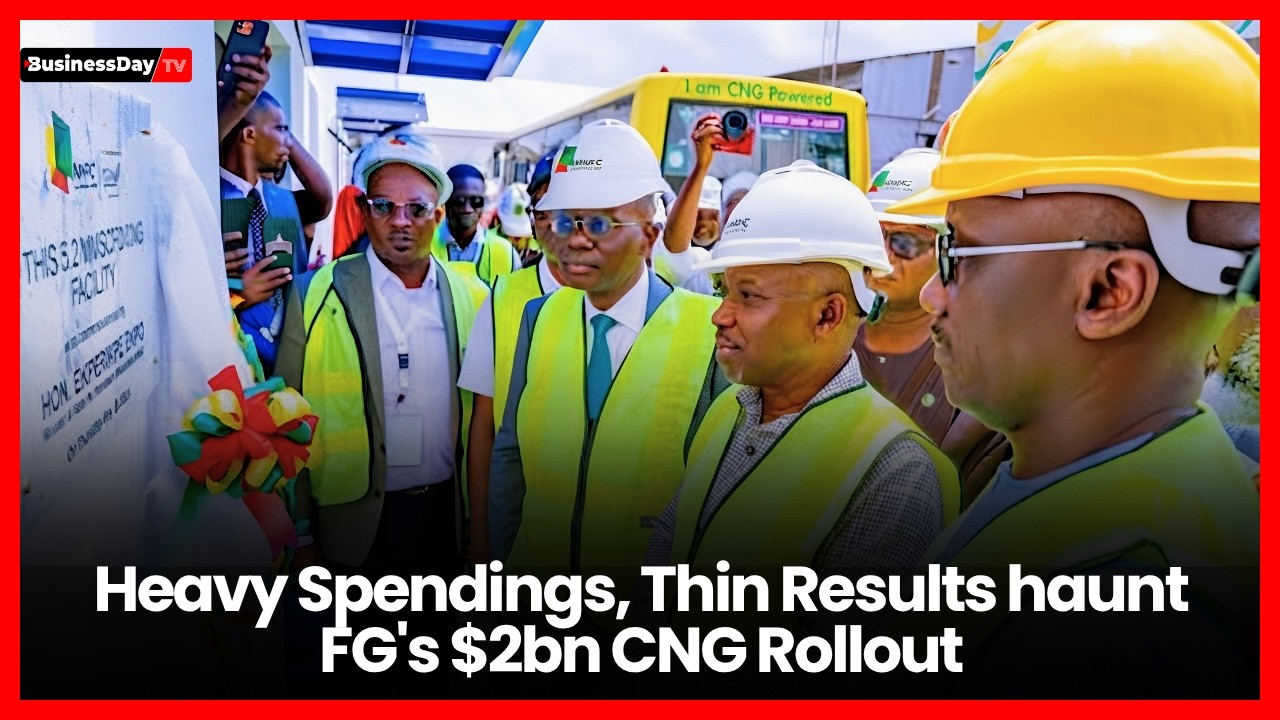
Heavy Spendings, Thin Results haunt FG's $2bn CNG Rollout | Behind the Headlines

Three years after the removal of the petrol subsidy promised relief through Compressed Natural Gas (CNG), billions have been spent, yet Nigerian motorists still face crippling fuel queues, conversion kit ...shortages, and scarce refuelling infrastructure. In this deep dive, we unpack the stark realities behind the federal government's $2 billion CNG rollout.

A closer look at federal spending records, industry bottlenecks, and expert insights reveals a troubling disconnect between heavy capital deployment and tangible infrastructure on the ground. While the Presidential Compressed Natural Gas Initiative (PCNGI) aims for ambitious vehicle conversion targets, issues ranging from delayed retail station approvals to restrictive funding terms are slowing momentum. From Lagos to Abuja, stakeholders are asking critical questions about where funds actually went and what must change to rescue Nigeria's clean energy transition.

Watch as we break down the figures, examine supply chain blockades, and analyze what the future holds for alternative energy mobility in Nigeria.

CHAPTERS:
00:00 – Introduction: The Promise vs. Reality of Nigeria’s CNG Rollout
01:30 – Where Did the Money Go? Breaking Down the $2B Investment
04:15 – The Conversion Crisis: Why Kits and Centres Remain Scarce
08:00 – Infrastructure Bottlenecks: Lagos and Abuja Refuelling Challenges
12:30 – Policy Hurdles and Financing Gaps for Private Investors
17:00 – What Needs to Change? Solutions for a Sustainable Energy Future

#CNG #Nigeria #Economy #Energy #Gas
Show More
Heavy Spendings, Thin Results haunt FG's $2bn CNG Rollout | Behind the Headlines
Now Playing
Heavy Spendings, Thin Results haunt FG's $2bn CNG Rollout | Behind the Headlines
Three years after the removal of the petrol subsidy promised relief ...
Three years after the removal of the petrol subsidy promised relief through Compressed Natural Gas (CNG), billions have been spent, yet Nigerian motorists still face crippling fuel queues, conversion kit ...shortages, and scarce refuelling infrastructure. In this deep dive, we unpack the stark realities behind the federal government's $2 billion CNG rollout.

A closer look at federal spending records, industry bottlenecks, and expert insights reveals a troubling disconnect between heavy capital deployment and tangible infrastructure on the ground. While the Presidential Compressed Natural Gas Initiative (PCNGI) aims for ambitious vehicle conversion targets, issues ranging from delayed retail station approvals to restrictive funding terms are slowing momentum. From Lagos to Abuja, stakeholders are asking critical questions about where funds actually went and what must change to rescue Nigeria's clean energy transition.

Watch as we break down the figures, examine supply chain blockades, and analyze what the future holds for alternative energy mobility in Nigeria.

CHAPTERS:
00:00 – Introduction: The Promise vs. Reality of Nigeria’s CNG Rollout
01:30 – Where Did the Money Go? Breaking Down the $2B Investment
04:15 – The Conversion Crisis: Why Kits and Centres Remain Scarce
08:00 – Infrastructure Bottlenecks: Lagos and Abuja Refuelling Challenges
12:30 – Policy Hurdles and Financing Gaps for Private Investors
17:00 – What Needs to Change? Solutions for a Sustainable Energy Future

#CNG #Nigeria #Economy #Energy #Gas
Show More
FAAN vs Uber & Bolt: Inside Nigeria’s Airport Transport Dispute | Behind the Headlines
Now Playing
FAAN vs Uber & Bolt: Inside Nigeria’s Airport Transport Dispute | Behind the Headlines
The tension between e-hailing services and airport management has ...
The tension between e-hailing services and airport management has escalated into a full-blown standoff. On this episode of Behind the Headlines, Brian Uche sits down with Ifeoma Okeke-Korieocha, the Aviation ...Editor at BusinessDay to explore the regulatory hurdles, driver grievances, and the impact on travelers at major Nigerian airports.

This video analyzes the root causes of the conflict and what needs to change to ensure a seamless experience for everyone involved.

#Uber #Bolt #Nigeria #AirportNews #Transportation #BusinessNews #TechInAfrica #BusinessDayTV
Show More
Hidden Fees Stall Nigeria’s Broadband Expansion Plan
Now Playing
Hidden Fees Stall Nigeria’s Broadband Expansion Plan
Nigeria's push to achieve widespread digital transformation is facing ...
Nigeria's push to achieve widespread digital transformation is facing a major silent bottleneck. While national targets aim to massively scale internet access across the country, exorbitant state levies and hidden ...charges are making infrastructure rollout nearly impossible outside major urban hubs.

BusinessDay's Technology desk lead Royal Ibeh breaks down the real economic impact of unpredictable right-of-way fees, multiple state taxation, and development levies on telecom operators. Despite federal agreements to standardise rates, subnational bottlenecks continue to drive up capital expenditure, forcing private investors to prioritize lucrative metro centers like Lagos and Abuja while leaving rural regions unconnected. Discover how these regulatory hurdles threaten national connectivity goals and what it means for the future of Nigeria's digital economy.

CHAPTERS:
00:00 – Introduction
[01:02] – The Impact of High Right-of-Way Fees on Telecom Investment
[03:34] – Why State Governments Fail to Comply with Uniform Rates
[05:04] – Can Operators Pass Hidden Costs to Consumers?
[06:19] – Unpredictable Charges and Investor Confidence
[07:39] – Should the Federal Government Enforce a National Fee?
[09:41] – Project Bridge and the Future of 90,000km Fiber Deployment

#Nigeria #Broadband #Telecoms #Tech #News
Show More
NGX Sheds N5.42trn in 20-Day Market Correction
Now Playing
NGX Sheds N5.42trn in 20-Day Market Correction
As the Nigerian Exchange (NGX) sheds N5.42trn in a sharp 20-day market ...
As the Nigerian Exchange (NGX) sheds N5.42trn in a sharp 20-day market correction, investors are left questioning their mid-year gains and portfolio strategies.

Following a historic peak of N160.40 trillion in ...
July, the local bourse has faced intense selling pressure and profit-taking across key sectors. Host Deborah Ezeh sits down with Iheanyi Nwachukwu (Assistant Editor, BusinessDay) to analyze how capital rotation, shifting monetary policy, and secondary market yields are driving this dramatic market shift. From the hardest-hit insurance and oil & gas equities to institutional fund reallocations, this video uncovers the underlying market fundamentals you need to navigate the rest of the financial year.

Whether you are a retail investor or tracking macro economic trends, understanding this equity valuation drop is vital for managing risk and capturing upcoming opportunities on the Nigerian stock market.

CHAPTERS:
00:00 – Introduction: Understanding the NGX Market Correction
01:15 – Why the Nigerian Exchange Shed N5.42 Trillion
03:30 – Hardest-Hit Sectors: Insurance, Oil & Gas, and Consumer Goods
06:45 – Macro Drivers: Secondary Market Yields & Capital Rotation
09:20 – Expert Outlook & Strategic Positioning for H2

#NGX #Nigeria #Naira #OilandGas #StockMarket #News #BusinessNews
Show More
Nigeria's Cash and Transfer Reform
Now Playing
Nigeria's Cash and Transfer Reform
Is Nigeria’s multi-billion naira cash transfer program actually ...
Is Nigeria’s multi-billion naira cash transfer program actually reaching the vulnerable, or is it getting lost in the system? We break down the data gap between registered citizens and those ...who actually receive payment.

Despite the government investing heavily in the National Social Register, millions of vulnerable Nigerians are still waiting for relief. In this episode of Behind the Headlines, we sit down with Dr. Oluwatobi Ojabello, Assistant Editor of Economy and Markets at BusinessDay, to examine the "genuine, rich, but unfinished" nature of Nigeria’s social protection reforms. We uncover the administrative bottlenecks, the transparency issues, and why the poverty rate continues to climb despite these massive cash injections.

This deep dive explores the correlation between policy and reality. We discuss why identifying beneficiaries is only the first step and why publication of data is crucial for accountability. Whether you are curious about the mechanics of social protection or concerned about the cost-of-living crisis, this analysis provides the expert context you need.

CHAPTERS:
00:00 – Introduction: The Promise of Cash Transfers
01:17 – The Disparity: Registered vs. Paid Nigerians
04:02 – Administrative Challenges vs. Institutional Weakness
05:11 – Why Poverty Rates Are Still Rising
07:53 – The Need for Transparency and Data Publication
09:42 – Political Influence in Economic Benefits
11:55 – Can Nigeria Run an Effective Social System?
13:43 – Future Protection Against Economic Shocks

#News #Nigeria #Economy #CashTransfer #BusinessDay
Show More
Nigeria's Health Insurance Reforms Expand Coverage, But Misses The Poor
Now Playing
Nigeria's Health Insurance Reforms Expand Coverage, But Misses The Poor
Nigeria's health insurance coverage is expanding, but the most ...
Nigeria's health insurance coverage is expanding, but the most vulnerable citizens are still falling through the cracks. Is the NHIA Act doing enough to bridge the gap?

In this episode of ...
Behind the Headlines, Host Elizabeth Musa and Oluwatobi Ojabello (Assistant Editor for Economy and Markets, BusinessDay) analyze the true impact of Nigeria's recent health insurance reforms. Four years after the National Health Insurance Authority (NHIA) Act of 2022 was signed, enrollment numbers are rising, but affordability remains a major hurdle for those in the informal economy. We break down why over 70% of Nigerians still rely on out-of-pocket payments and whether the current strategy can truly achieve universal health coverage by 2030.

We examine the reality of the Vulnerable Group Fund and why "mandatory" participation is struggling against weak enforcement mechanisms at the state and local levels. From the cost-of-living crisis to the lack of awareness in local markets, we discuss the systemic failures that keep healthcare out of reach for artisans, traders, and self-employed Nigerians.

CHAPTERS:
00:00 – Introduction: The state of Nigeria’s health insurance
01:45 – Why the poor are being left behind
03:10 – Impact of inflation on insurance affordability
04:25 – The truth about the Vulnerable Group Fund
07:15 – Addressing the 2030 coverage target reality
09:00 – Why the mandatory act isn't working yet
11:00 – Challenges in the informal sector
14:30 – Final verdict: A partial success

#News #Nigeria #Health #NHIA #HealthInsurance
Show More
Lagos Launches Digital Building Insurance Scheme To Curb Fire
Now Playing
Lagos Launches Digital Building Insurance Scheme To Curb Fire
Lagos State has officially launched a revolutionary digital building ...
Lagos State has officially launched a revolutionary digital building insurance scheme aimed at curbing catastrophic fire outbreaks and securing property investments.

Host Elizabeth Musa sits down with BusinessDay's Taofeek Oyedokun ...
to breakdown the core policy behind the Lagos building insurance scheme, examining how the government plans to enforce mandatory compliance through agencies like Lagos State Physical Planning Permit Authority (LASPPPA) and Lagos State Building Control Agency (LASBCA). With over 1,100 fire incidents and nearly ₦20 billion in economic losses recorded recently, property owners, landlords, and tenants face massive financial risks [01:40]. We explore whether this digital verification portal will truly transform insurance penetration in Nigeria or if it risks becoming just another unenforced regulation [03:06].

CHAPTERS:
00:00 – Introduction [00:03]
01:19 – Why Lagos Introduced the Digital Building Insurance Scheme [01:19]
02:56 – Why Compliance Has Failed in Nigeria Over the Years [02:56]
05:32 – The ₦5 Million Penalty and Enforcement Mechanisms [05:32]
06:57 – Economic and Governance Problems Being Solved [06:57]
10:35 – Expanding Insurance Penetration & Overcoming Trust Deficits [10:35]
13:40 – What to Watch Out For in the Coming Months [13:40]

#Lagos #Insurance #BuildingInsurance #Nigeria
Show More
The Dangote Petroleum Refinery has resumed the sale of petrol in naira | Behind the Headlines
Now Playing
The Dangote Petroleum Refinery has resumed the sale of petrol in naira | Behind the Headlines
The Dangote Petroleum Refinery has officially resumed petrol sales in ...
The Dangote Petroleum Refinery has officially resumed petrol sales in Naira at a gantry price of ₦1,215 per liter, sparking intense debate across Nigeria's downstream oil sector.

In this in-depth analysis, ...
Host Deborah Ezeh sits with Dipo Oladehinde (Head of Energy Desk, BusinessDay) who breaks down what this development means for everyday consumers, fuel marketers, and the broader economy. With the naira-for-crude scheme facing implementation hurdles and global crude oil prices hovering near $100 per barrel, navigating the downstream sector has never been more complex. Energy experts weigh in on why price uniformity is impossible in a deregulated market and how these shifting energy costs directly fuel inflation, transportation struggles, and food prices nationwide.

Whether you are tracking petroleum economics, managing business overheads, or trying to understand how government policies affect your cost of living, this video unpacks the critical realities behind the headlines.

CHAPTERS:

00:00 – Introduction

00:58 – Dangote Resumes Petrol Sales in Naira

03:06 – Implications of Gantry Prices on Consumers

05:51 – Market Competition and Pricing Uniformity

07:28 – Impact on Inflation and Transportation Costs

09:44 – Policy Interventions and Market Solutions

#DangoteRefinery #Naira #Petrol #Nigeria #Economy
Show More
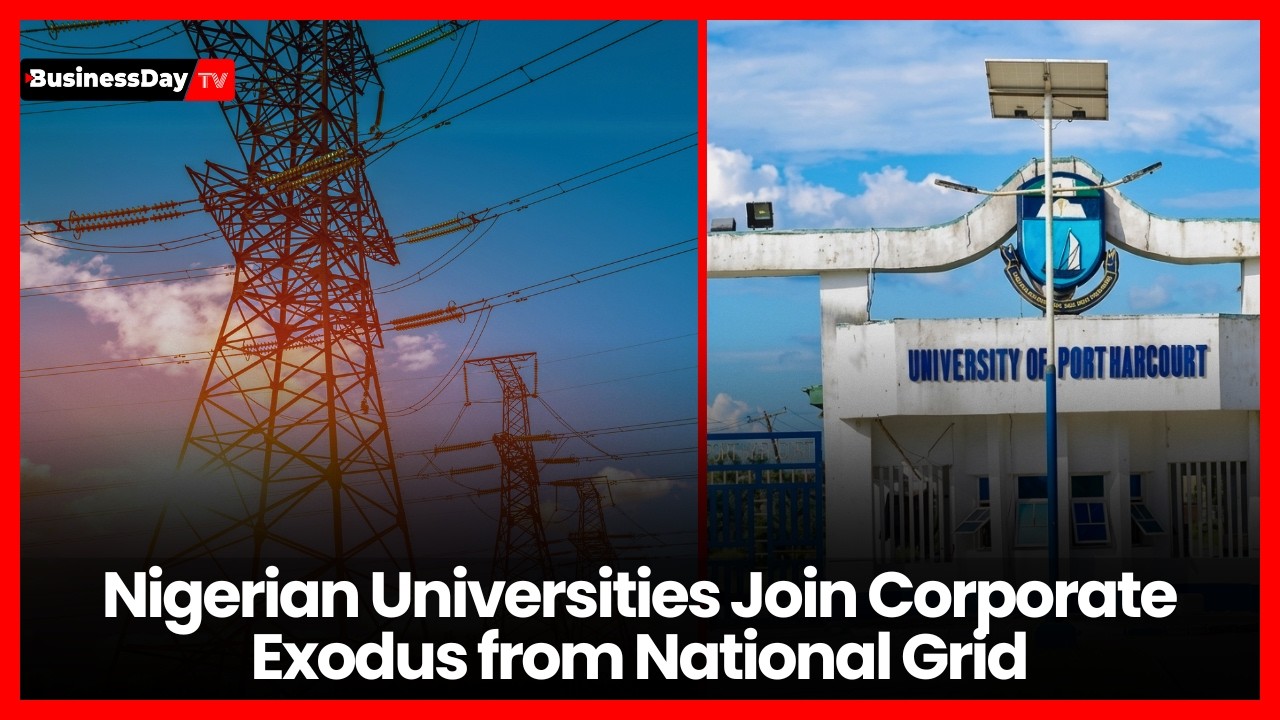
Nigerian Universities Join Corporate Exodus from National Grid
Now Playing
Nigerian Universities Join Corporate Exodus from National Grid
Why are Nigeria's elite federal institutions building their own power ...
Why are Nigeria's elite federal institutions building their own power plants? Watch how the national grid collapse is forcing higher education into a massive corporate energy exodus.

In this episode of ...
Behind the Headlines, host Elizabeth Musa sits down with BusinessDay’s energy correspondent, Ibrahim Abubakar, to dissect a worrying trend: Nigerian universities are officially abandoning the national electricity grid. According to latest data from the Nigerian Electricity Regulatory Commission (NERC), universities accounted for over 80% of all captive power generation approvals in Q1 2026. Top institutions like the University of Port Harcourt (UNIPORT), Modibbo Adama University, and the Federal University of Uyo are taking power into their own hands.

We break down what this massive shift means for the future of Nigerian education, research laboratories, and teaching hospitals that require 24/7 uninterrupted power. We also look at the financial strain of self-generation under Band A tariff pressures, the rise of solar energy alternatives, and how the loss of high-paying corporate and government consumers could trigger a total revenue collapse for Nigeria's DisCos and GenCos.

CHAPTERS:

00:00 – Introduction: The Corporate Grid Exodus

01:20 – Why Universities are Building Their Own Power Plants

03:38 – NERC Q1 2026 Captive Power Approvals Breakdown

06:40 – What Gov Institutions Leaving the Grid Signals

08:45 – The True Cost of Alternative Energy in Nigeria

10:52 – Grid Collapse vs. Captive Power Demand

14:44 – Why This Exodus Will Ruin DisCos & GenCos

16:08 – Is Nigeria Split Into Two Power Systems?

21:00 – How to Bring Corporate Consumers Back to the Grid

23:25 – Outro: Going Back to the Drawing Board


#Nigeria #PowerCrisis #NationalGrid #NigerianUniversities
Show More
What To Expect From Nigeria’s Economy In The Second Half Of 2026 | Behind the Headlines
Now Playing
What To Expect From Nigeria’s Economy In The Second Half Of 2026 | Behind the Headlines
Will Nigeria’s current macroeconomic stability hold up through the ...
Will Nigeria’s current macroeconomic stability hold up through the second half of the year, or is the ground beneath us shifting? In this episode of Behind the Headlines, we break ...down what businesses, foreign investors, and everyday citizens should expect from Nigeria's economy in H2 2026.

Nigeria is entering the latter half of 2026 with a surprisingly resilient baseline: external reserves have crossed the historic $50 billion mark, and the Stanbic IBTC PMI data indicates continuous economic expansion. However, macro stability remains tightly contested as food inflation sits at a heavy 15.9%. Join Deborah Ezeh and BusinessDay's Head of Companies & Market, Chinwe Michael, as they unpack the exact systemic levers driving these trends and why the Central Bank of Nigeria (CBN) is likely keeping interest rates holding flat at 26.5%.

They dive deep into the true impact of fuel subsidy removals, logistics bottlenecks, and lingering regional energy costs on local commerce. Additionally, this analysis details how impending 2027 pre-election spending threatens to dry up foreign portfolio investor confidence in the equities market. Discover which growth sectors—especially services, insurance, financial institutions, and agricultural supply chains—hold the biggest opportunities for survival and high-yield returns despite a declining pace of broader economic activity.

CHAPTERS:
00:00 – Introduction & H2 2026 Economic Outlook
01:10 – Is Nigeria's Macroeconomic Stability Sustainable?
02:22 – Geopolitical Clashes & Global Oil Price Shocks
03:35 – Will the CBN Keep Interest Rates at 26.5%?
04:45 – Structural Reforms, Insecurity & Logistic Bottlenecks
05:45 – The 70,000 Naira Minimum Wage vs High Food Prices
08:35 – 2027 Election Spending and Foreign Investor Risks
11:05 – Top Performing Sectors for Investors in H2 2026
13:50 – Conclusion & Final Summary

#Nigeria #Economy #CBNInterestRates #Naira #News #Tinubu
Show More
Investors pour over N100bn into Nigeria's insurance bet | Behind the Headlines
Now Playing
Investors pour over N100bn into Nigeria's insurance bet | Behind the Headlines
Why are investors pumping over N100 billion into Nigeria’s insurance ...
Why are investors pumping over N100 billion into Nigeria’s insurance sector instead of running away? The July 31st, 2026 deadline is triggering massive financial shifts you need to know.

In ...
this episode of Behind the Headlines, Elizabeth Musa sits down with Modestus Anaesoronye, the Head of the Insurance Desk at BusinessDay Television, to unpack the massive waves hitting Nigeria's financial sector. Under the Nigerian Insurance Industry Reform Act 2025, companies are aggressively racing to meet newly implemented risk-based capital requirements. While previous recapitalization exercises in the Nigerian banking sector or insurance fields caused panic, consolidation, and weak players crashing, this 2026 exercise is showing a completely different trend.

At least nine major insurance companies have hit the capital market via private placement and rights issues, securing over N100 billion. With the National Insurance Commission (NAICOM) preparing to unveil the final verified companies, this video reveals the long-term investment strategies driving this sudden wave of investor confidence. Discover how a sector with less than 1% GDP market penetration is positioning itself to unlock the true economic size of Nigeria.

CHAPTERS:

00:00 – Introduction: The N100 Billion Bet on Nigeria

01:21 – The July 31st Deadline & The Insurance Industry Reform Act 2025

02:27 – Why This Recapitalization is Completely Different

03:22 – Under 1% GDP Penetration: The Untapped Nigerian Market

04:31 – How Big 4 Audit Firms Are Verifying the Capital

06:40 – Why Nigeria Ranks 4th in Africa (And How Credit Changes It)

09:02 – How New Capital Will Fix Claims Payment & Consumer Trust

11:15 – Shareholder Dividends: Penny Stocks Turning into Giants?

13:20 – What NAICOM’s Next Big Move Means for Customers


#news #Nigeria #Insurance #Business #Recapitalization
Show More
Governors Get Powers to Appoint Commissioners Under State Police Bill
Now Playing
Governors Get Powers to Appoint Commissioners Under State Police Bill
Will the new state police bill fix Nigeria's security crisis, or will ...
Will the new state police bill fix Nigeria's security crisis, or will it give governors too much power? Find out exactly what this historic constitutional reform means for you. [00:11]

Nigeria’s ...
long-running debate over state police has reached a monumental turning point with the Senate passing a constitutional amendment bill. In this episode of Behind the Headlines, Akeminiobong Michael sits down with BusinessDay's Editorial Director Joshua Bassey who breaks down the crucial provisions that empower state governors to appoint commissioners of police. Discover how this massive structural shift departs from the centralized policing framework run since 1999, and learn how it changes everything from regional operations to grassroots security. [00:36]

We dive deep into the essential checks and balances designed to prevent political abuse by governors, highlighting the oversight roles of the National Police Council and state houses of assembly. The discussion addresses the practical realities of the transition, exploring stark funding challenges across different states and the significant impact on local job recruitment, welfare, and officers bearing arms. Watch to see if your state is ready to deploy its own police force or if it will continue to rely entirely on federal police commands. [06:43]

CHAPTERS:
00:00 – Introduction
00:11 – Breakdown of Nigeria’s Landmark State Police Bill
00:44 – New Powers of Governors to Appoint Police Commissioners
03:34 – Centralized vs. Decentralized Policing in Nigeria
04:51 – Crucial Safeguards: Preventing Political Abuse by Governors
06:43 – Oversight Powers: The National Police Council & Removal Rules
07:53 – The Federal Government’s Role and Residual Control
09:27 – State Transition Timeline & What Happens If States Can't Launch
10:28 – Job Opportunities: Local Recruitment and Language Barriers
13:58 – Practical Challenges: Funding, Weapons, and the Security Vote
18:57 – Will State Policing Force Governors to Industrialize?
21:00 – Conclusion & Final Takeaways


#StatePolice #Nigeria #Security #Policebill #news
Show More
Democratic Republic of Congo-One of the World's Poorest Nations Is Building Its First Stock Exchange
Now Playing
Democratic Republic of Congo-One of the World's Poorest Nations Is Building Its First Stock Exchange
The Democratic Republic of Congo is making a massive, historic pivot ...
The Democratic Republic of Congo is making a massive, historic pivot by establishing its first-ever DRC stock exchange in partnership with the IFC. [00:54], [07:01] Can a country heavily labeled ...as poverty-stricken leverage its massive mining wealth to build a sustainable capital market? [01:48], [03:36]

In this episode of Behind the Headlines, Akeminiobong michael sits down with BusinessDay's Assistant Editor for African Finance, Bunmi Bailey who delivers a deeply insightful analysis on the economic transformations sweeping the DRC. [00:10] Despite being one of the world's most resource-rich nations with vast reserves of copper, cobalt, gold, and lithium, much of the DRC's population remains unbanked and poor. [00:35] However, fueled by soaring international mineral demand for technologies like electric vehicles and data centers, the Congolese government is taking action to capture long-term foreign direct investment (FDI). [02:54], [03:11]

They explore the broader implications of this financial landmark, comparing it with Ethiopia’s recently launched stock market. [02:06] They break down how big Nigerian and Pan-African banks like Access Bank, EcoBank, and Fidelity Bank are positioning themselves in Kinshasa to tap into these emerging capital markets. [05:58], [06:05] Discover how this historic move might transition the DRC from a purely extractive economy into a manufacturing hub, and how it will alter the economic rankings within Sub-Saharan Africa. [04:54], [07:30]

CHAPTERS:

00:00 – Introduction & Behind the Headline Context [00:10]

01:34 – Why DRC is Launching a Stock Market Now [01:34]

02:27 – Explaining the Surge in Lithium, Copper, and Gold Demand [02:27]

04:03 – Success in the Eurobond Market & Overtaking Ghana [04:03]

05:52 – Pan-African Banking Influx: Access Bank & EcoBank in DRC [05:52]

06:55 – The IFC Partnership Framework & Mining Sector Focus [06:55]

07:41 – Moving from an Extractive Ecoomy to a Manufacturing Hub [07:41]

09:40 – Lessons from Ethiopia's Slow Stock Exchange Launch [09:40]

11:37 – Shifting the Global Narrative Around Congo's Economy [11:37]

12:13 – The Future of Capital Markets in Smaller African Nations [12:13]


#DRC #news #DRCStockExchange #Africa #Economy #stockexchange
Show More
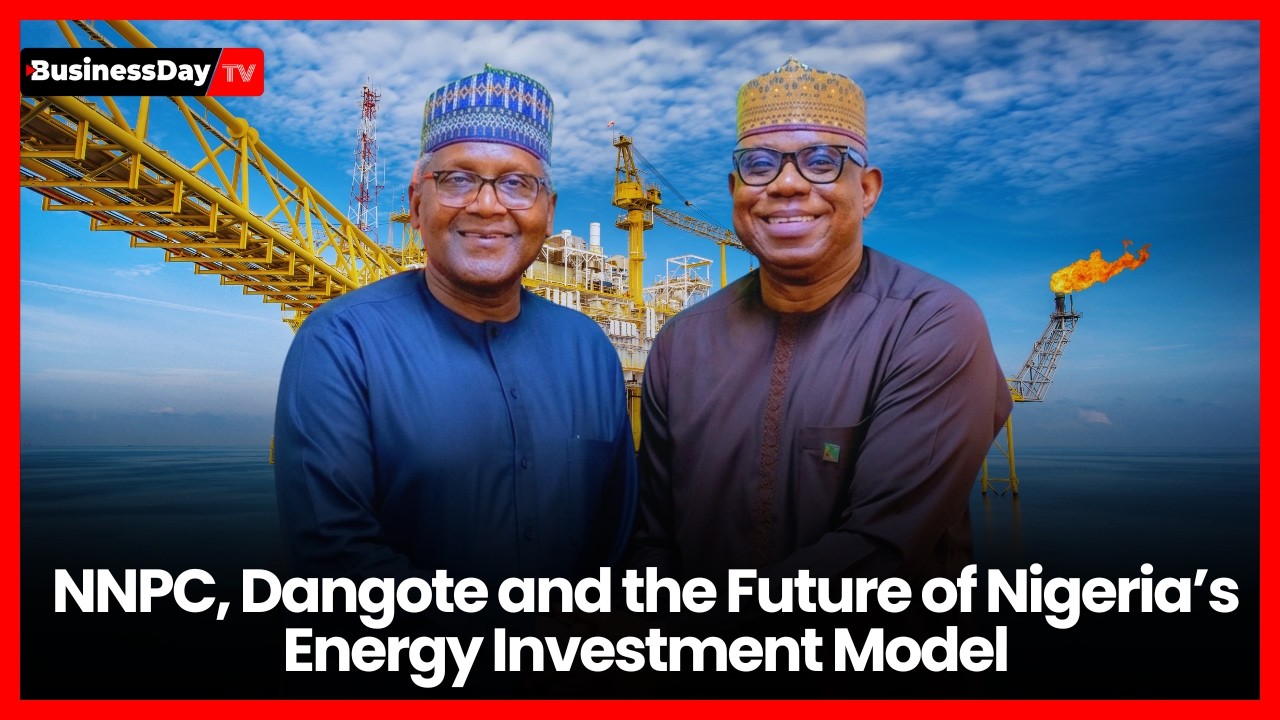
NNPC, Dangote and the Future of Nigeria’s Energy Investment Model | Behind the Headlines
Now Playing
NNPC, Dangote and the Future of Nigeria’s Energy Investment Model | Behind the Headlines
The truth behind Nigeria's oil crisis is finally coming to light. ...
The truth behind Nigeria's oil crisis is finally coming to light. While NNPC refineries remain dormant after trillions spent, the Dangote Petroleum Refinery is rewriting the nation's energy investment playbook.

In ...
this episode of Behind the Headlines, host Elizabeth Musa sits down with BusinessDay’s energy correspondent, Ibrahim Abubakar, to dissect the stark contrast between government-managed infrastructure and private capital efficiency. We break down the hard numbers behind the ₦3.2 trillion spent on turn-around maintenance for the Port Harcourt, Warri, and Kaduna refineries, revealing why these public assets have consistently failed to deliver value to Nigerians.

The conversation dives deep into the strategic implications of NNPC’s reduced equity stake in the Dangote Refinery—dropping from an intended 20% down to 7.25% due to crude supply shortfalls. We analyze how NNPC's initial $1 billion cash investment has matured to a pre-IPO valuation of nearly $2.8 billion, mirroring the exact amount lost in failed rehabilitation projects. Finally, we explore the broader upstream sector crisis, detailing how regulatory red tape, ease of doing business, and security threats are driving international oil majors offshore to countries like Angola and Congo.

CHAPTERS:
00:00 – Introduction: The Tale of Two Energy Models

01:21 – Public vs Private: The Core Differences in Operations

02:28 – Why Government Has No Business Doing Business

03:15 – The ₦3.2 Trillion Mystery: Why NNPC Refineries Fail

04:55 – Refining vs Blending: What is Actually Happening?

06:10 – The NLNG Partnership Model: A Blueprint That Works

08:34 – Comparing Public Assets: Saudi Aramco vs NNPC

10:04 – NNPC's Dangote Stake Drop: From 20% to 7.25% Explained

11:34 – The $1 Billion Investment: Valuation & Pre-IPO Returns

14:15 – Why International Oil Majors are Fleeing Onshore Fields

15:24 – Regulatory Red Tape: Nigeria vs Angola and Congo Oil Ease

16:55 – Can Chinese Partners Save the Port Harcourt Refinery?

19:20 – Power Sector Echoes: Metering and Energy Security Focus

21:00 – The Verdict: How to Attract Oil and Gas Investors Back

22:20 – Outro & Conclusion

#dangote #DangoteRefinery #NNPC #Nigeria #OilAndGas
Show More
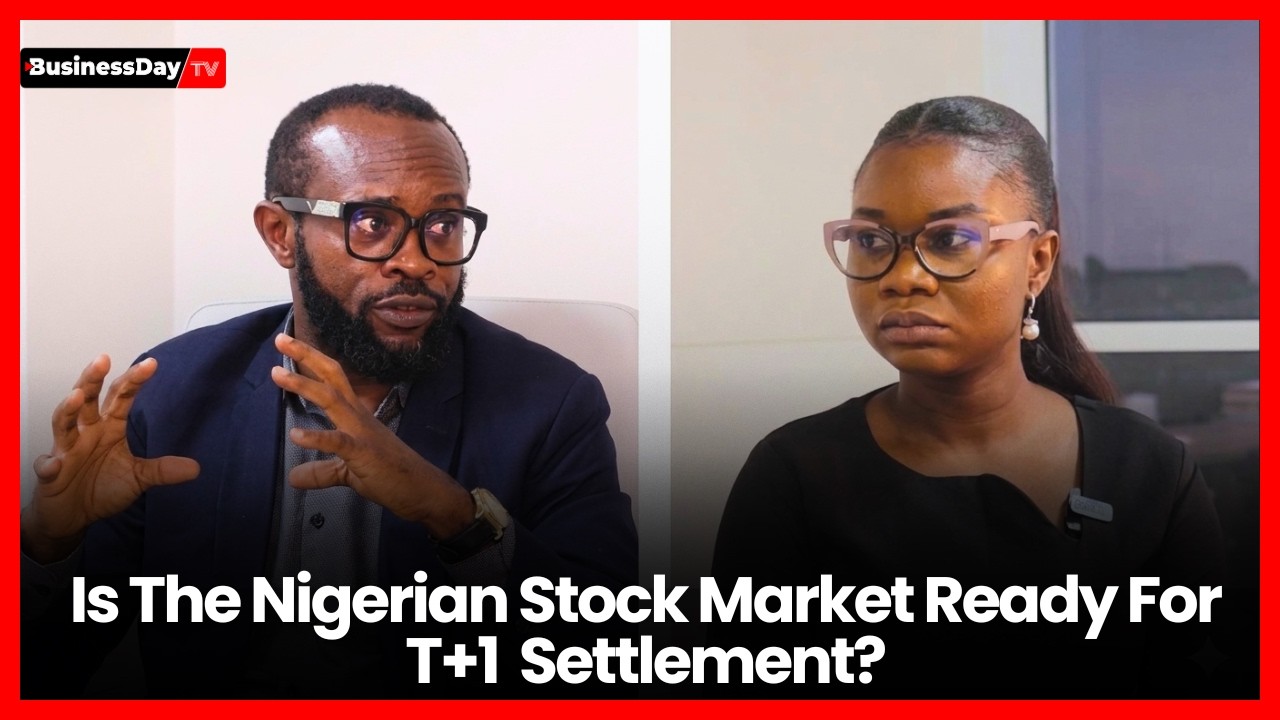
Nigerian Stock Market T+1 Settlement Cycle: Expert Analysis
Now Playing
Nigerian Stock Market T+1 Settlement Cycle: Expert Analysis
The Nigerian Stock Market just went through its biggest regulatory ...
The Nigerian Stock Market just went through its biggest regulatory evolution in years, moving to a rapid T+1 settlement cycle. If you trade equities in Nigeria, this single structural change ...is about to completely alter how quickly you get your cash and stock values.

In this episode of Behind the Headlines, BusinessDay’s Elizabeth Musa sits down with Assistant Editor Iheanyi Nwachukwu to dissect the Securities and Exchange Commission (SEC), Central Securities Clearing System (CSCS), and Nigerian Exchange Group (NGX) transition from T+2 to T+1 settlement. Discover how this massive milestone reduces counterparty risk, increases overall market liquidity, and drastically changes the environment for retail investors.

We break down the technical realities of making trades and receiving value the next business day, removing the agonizing wait times for cash or equities to hit your account. Additionally, learn how this strategic alignment with developed markets like the United States and Canada sets up the Nigerian capital market for massive Foreign Portfolio Investment (FPI) ahead of the historic September 21st Frontier Market reclassification.

CHAPTERS: 00:00 – Introduction

00:24 – What is the T+1 Settlement Cycle?

01:04 – Why T+1 is a Landmark Milestone for Nigeria

02:45 – T+2 vs T+1: The Real Operational Differences

03:26 – Faster Cash Access & Equity Credits Explained

05:18 – How Next-Day Settlements Eliminate Counterparty Risk

06:43 – The Impact on Foreign Portfolio Investments (FPI)

08:21 – Market Liquidity & Extended Trading Hours to 4 PM

09:35 – Are Nigerian Brokers Ready for Tech Outages?

11:00 – Reclassification & How to Build Wealth Before Sept 21

#Nigeria #StockMarket #T1Settlement #NGX
Show More
1 of 4
Facebook Twitter Youtube