Skip to content
  • Home
  • Programmes
  • Channel
  • Blog
  • Programme Schedule
  • Home
  • Programmes
  • Channel
  • Blog
  • Programme Schedule

Why Is Nigeria Not Able to Attract FDI Despite Reforms?

Nigeria devalued the Naira and cut subsidies to attract foreign investors, so why is foreign direct investment (FDI) still completely avoiding the country? We break down the alarming systemic failures ...holding back Nigeria's path to a $1 Trillion economy.

BusinessDay Publisher Frank Aigbogun and Lolade Akinmurele (Editor, BusinessDay) and Bunmi Bailey (Assistant Editor, BusinessDay) dissect the jarring paradox of Nigeria’s current economic climate. While the Central Bank of Nigeria (CBN) has achieved stability with foreign portfolio investment (FPI) and the Nigerian exchange group (NGX) stock market has experienced a massive 50% rally, long-term foreign direct investment remains critically absent. We contrast Nigeria's stagnation with Egypt’s massive $46 Billion capital importation breakthrough to pinpoint what the presidency is getting completely wrong.

The conversation addresses the core structural blockades paralyzing local and global investor confidence, including severe manufacturing power outages, national insecurity crippling agriculture, and highly elevated tax structures. Furthermore, we reveal why a booming stock market has failed to trigger Initial Public Offerings (IPOs), evaluating why major institutions like the Dangote Refinery are diversifying across multiple African exchanges rather than relying solely on local liquidity. Finally, we analyze banking sector efficiency, investigating why aggressive expansion models like Access Bank are raising serious questions among asset management firms.

CHAPTERS:
00:00 – Introduction: The African Inflation Snapshot
02:10 – How Ghana, Angola & Zambia Are Beating Nigeria's Inflation
04:00 – The Fallout of 2023 Subsidy & Currency Reforms
05:25 – CBN Exchange Rate Management & FPI Stability
07:08 – The FDI Crisis: Why Foreign Direct Investment is Lagging
09:20 – How Egypt Attracted $46 Billion While Nigeria Missed Out
11:05 – What Global Investors Look for After an Election Cycle
12:10 – Structural Failure: Power, Security, and Manufacturing Stagnation
13:15 – Domestic Investment vs FDI: The Local Investor Network
14:45 – Tracking Tinubu's $1 Trillion Economy Target for 2030
15:35 – The Stock Market Rally Paradox: Where Are the IPOs?
16:20 – Dangote Refinery IPO Strategy & Cross-Border Listings
18:40 – High Interest Rates vs Equity Alternatives for Expansion
21:20 – Devaluation & Profit Declines in Nigerian Banking Stocks
22:30 – Access Bank Acquisition Strategy vs Efficiency Concerns
23:25 – Conclusion: Nigeria's Path to Single-Digit Inflation

#nigeria #economy #FDI #news #naira #tinubu
Show More
Why Is Nigeria Not Able to Attract FDI Despite Reforms?
Now Playing
Why Is Nigeria Not Able to Attract FDI Despite Reforms?
Nigeria devalued the Naira and cut subsidies to attract foreign ...
Nigeria devalued the Naira and cut subsidies to attract foreign investors, so why is foreign direct investment (FDI) still completely avoiding the country? We break down the alarming systemic failures ...holding back Nigeria's path to a $1 Trillion economy.

BusinessDay Publisher Frank Aigbogun and Lolade Akinmurele (Editor, BusinessDay) and Bunmi Bailey (Assistant Editor, BusinessDay) dissect the jarring paradox of Nigeria’s current economic climate. While the Central Bank of Nigeria (CBN) has achieved stability with foreign portfolio investment (FPI) and the Nigerian exchange group (NGX) stock market has experienced a massive 50% rally, long-term foreign direct investment remains critically absent. We contrast Nigeria's stagnation with Egypt’s massive $46 Billion capital importation breakthrough to pinpoint what the presidency is getting completely wrong.

The conversation addresses the core structural blockades paralyzing local and global investor confidence, including severe manufacturing power outages, national insecurity crippling agriculture, and highly elevated tax structures. Furthermore, we reveal why a booming stock market has failed to trigger Initial Public Offerings (IPOs), evaluating why major institutions like the Dangote Refinery are diversifying across multiple African exchanges rather than relying solely on local liquidity. Finally, we analyze banking sector efficiency, investigating why aggressive expansion models like Access Bank are raising serious questions among asset management firms.

CHAPTERS:
00:00 – Introduction: The African Inflation Snapshot
02:10 – How Ghana, Angola & Zambia Are Beating Nigeria's Inflation
04:00 – The Fallout of 2023 Subsidy & Currency Reforms
05:25 – CBN Exchange Rate Management & FPI Stability
07:08 – The FDI Crisis: Why Foreign Direct Investment is Lagging
09:20 – How Egypt Attracted $46 Billion While Nigeria Missed Out
11:05 – What Global Investors Look for After an Election Cycle
12:10 – Structural Failure: Power, Security, and Manufacturing Stagnation
13:15 – Domestic Investment vs FDI: The Local Investor Network
14:45 – Tracking Tinubu's $1 Trillion Economy Target for 2030
15:35 – The Stock Market Rally Paradox: Where Are the IPOs?
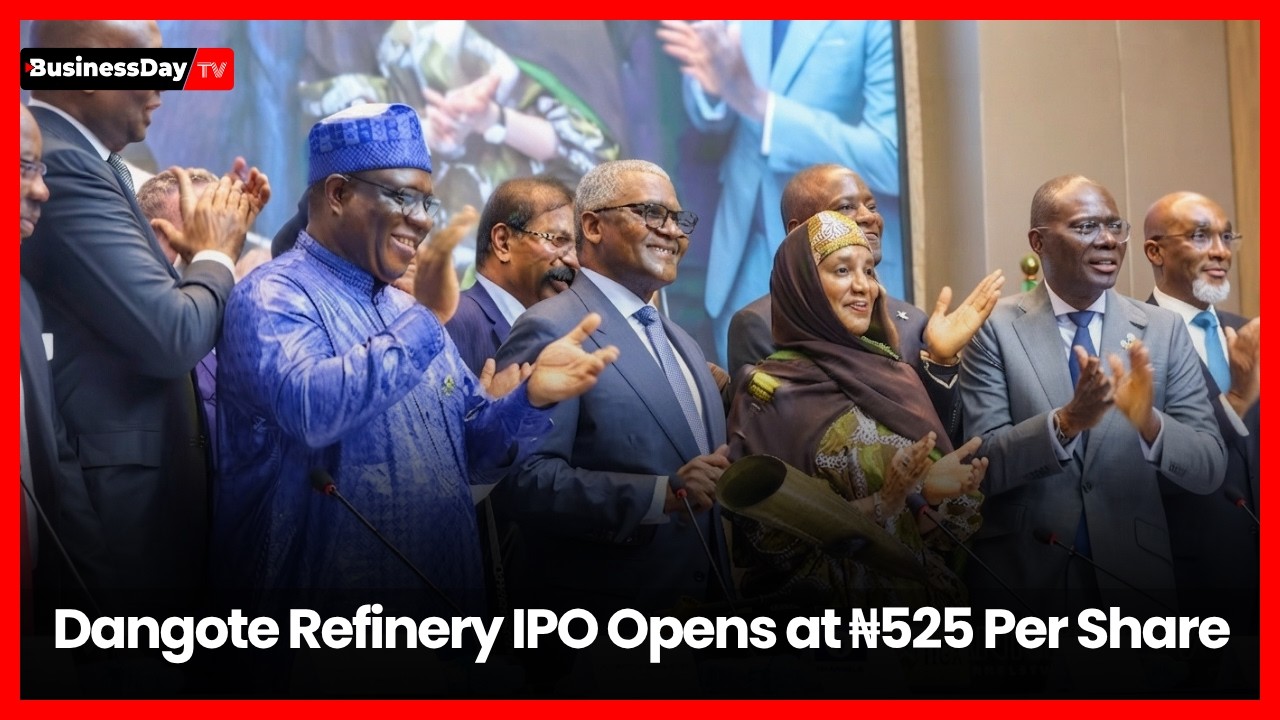
16:20 – Dangote Refinery IPO Strategy & Cross-Border Listings
18:40 – High Interest Rates vs Equity Alternatives for Expansion
21:20 – Devaluation & Profit Declines in Nigerian Banking Stocks
22:30 – Access Bank Acquisition Strategy vs Efficiency Concerns
23:25 – Conclusion: Nigeria's Path to Single-Digit Inflation

#nigeria #economy #FDI #news #naira #tinubu
Show More
Will Dangote Petrol Prices Drop Below ₦1,000 This Month?
Now Playing
Will Dangote Petrol Prices Drop Below ₦1,000 This Month?
As global crude oil prices begin to plunge, millions of Nigerians are ...
As global crude oil prices begin to plunge, millions of Nigerians are desperately looking for a massive sigh of relief at the petrol pumps. BusinessDay Publisher Frank Aigbogun and Lolade ...Akinmurele (Editor, BusinessDay) and Bunmi Bailey (Assistant Editor, BusinessDay) break down exactly how the shifting dynamics between international energy markets, the Central Bank of Nigeria's foreign exchange reserves, and local supply hubs will impact your wallet this month.

The global economy is facing a massive shakeup as international oil benchmarks cool down from their wartime peaks. While this usually signals a drop in retail fuel costs, the structural realities of Nigeria’s economy mean things aren’t always that simple. We dive deep into the operations of the Dangote Refinery, analyzing how its domestic crude allocations from the Federal Government are impacting local supply chains and why the refinery has suddenly become a dominant player in aviation fuel and regional West African trade.

Furthermore, we contrast Nigeria's current macroeconomic landscape with other African peers like Zambia, Angola, and Ghana. While rising copper demand has stabilized currencies elsewhere, Nigeria’s production-sensitive model continues to struggle with persistent inflationary pressures, elevated food prices, and an influx of foreign portfolio investments. Watch until the end to understand whether true disinflation is on the horizon or if the high cost of living is here to stay.

CHAPTERS:
00:00 – Introduction: The Shocking Fuel Price Dilemma
01:15 – Where Did Nigeria's $23 Million-a-Day Excess Oil Profit Go?
02:30 – The Real Reason Nigeria's Foreign Exchange Reserves Are Rising
03:45 – Will Dangote Petrol Prices Drop Below ₦1,000 This Week?
05:10 – Why Fuel Prices Spike Instantly But Drop Mechanically Slow
06:40 – How the Geopolitical Crisis Handed Dangote Free Crude Oil
08:20 – Aviation Fuel & Jet A1: Dangote’s Global Takeover
09:50 – African Inflation Battle: Why Zambia and Angola Are Beating Nigeria
11:30 – Strategic Conclusion: Nigeria’s True Comparative Advantage


#DangoteRefinery #dangote #FuelPrice #Nigeria #Naira #News
Show More
Court Declares N110bn Splurge on SUVs, Allowances for Lawmakers Unlawful
Now Playing
Court Declares N110bn Splurge on SUVs, Allowances for Lawmakers Unlawful
The Federal High Court has officially declared the controversial ₦110 ...
The Federal High Court has officially declared the controversial ₦110 Billion splurge on luxury SUVs and allowances unlawful. As household purchasing power vanishes across Nigeria, this landmark judgment marks a ...major turning point in the fight against political corruption and economic insensitivity.

In this episode of Business Week, BusinessDay Publisher Frank Aigbogun and Lolade Akinmurele (Editor, BusinessDay) break down the legal and economic implications of the recent Federal High Court ruling against the National Assembly’s ₦110 billion luxury vehicle purchase. They discuss the deep leadership problem and systemic corruption that allows political office holders to enjoy immense luxury while everyday Nigerians struggle to survive on multiple jobs under severe economic reforms.

Furthermore, the discussion tackles Nigeria's rising debt stock, the massive trust deficit between citizens and the government, and the recurring pattern of executing 100% recurrent expenditure while starving capital developments. They also analyze the ongoing security crisis, the recent Oyo State police rescue of the Adelabu family, and the strategic leadership reforms needed such as leveraging technology and economic stability to rescue Nigeria from severe poverty and institutional collapse.

CHAPTERS
00:00 – Introduction & Nigeria's Collapsing Purchasing Power

00:37 – Court Rules ₦110Bn Lawmaker SUVs Unlawful

01:26 – Nigeria's Rising Debt Stock vs Luxury Spending

02:50 – Why the Court Struck Down the N110B Allocation

03:24 – The Nigerian Leadership Crisis & Political Corruption

05:19 – Recurrent Expenditure vs Capital Spending Crucial Gap

07:59 – Comparative Analysis: Why Businesses Choose Ghana Over Nigeria

10:53 – Security Crisis: Police Rescue Adelabu's Family

13:57 – The Extortion Problem in the Nigerian Police Force

17:15 – 3 Strategic Steps the President Must Take to Fix Insecurity

19:00 – Conclusion & Business Week Wrap-up


#Nigeria #news #politics #economy #NationalAssembly
Show More
For Nigerian Households, One Job Is No Longer Enough
Now Playing
For Nigerian Households, One Job Is No Longer Enough
Nigeria’s cost of living crisis has reached a breaking point, one job ...
Nigeria’s cost of living crisis has reached a breaking point, one job per household is no longer enough to survive. Discover the brutal reality of stagnant incomes versus spiralling inflation ...and what it takes to stay afloat.

In this episode of Business Week, BusinessDay Publisher Frank Aigbogun and Lolade Akinmurele (Editor, BusinessDay) deliver a detailed breakdown of the unfolding economic crisis facing Nigerian households. Driven by the removal of the petroleum subsidy, multiple exchange rate alignments, and a staggering 5x surge in food prices since 2015, the purchasing power of the average family has completely faded. While institutional investors watch the stock market triple, multi-dimensional poverty has spiked to over 131 million citizens who are left scrambling to find survival side hustles just to buy food and pay basic bills.

They dive deep into an exclusive BusinessDay survey tracking how professionals including Lagos bankers are forced into ride-hailing gigs like Uber and online social media retail to combat stagnant incomes. They dissect the historical context of Nigeria's dependency on oil exports, the reckless cycle of currency devaluation, and the alarming lack of empathy from a political class spending ₦110 billion on luxury SUVs. Discover the critical infrastructure and structural reforms needed to establish a viable consumer credit framework, lower energy costs, and save the largest market in Africa from a catastrophic collapse in consumer purchasing power.

CHAPTERS:
00:00 – Introduction to Nigeria’s Household Crisis
01:06 – The Fading Purchasing Power & Inflation Spike
02:24 – Food Inflation & The Reality of Food Costs
03:10 – Why ₦2 Million is the New Minimum Survival Income
04:50 – The Rise of Ride-Hailing Gigs and Side Hustles
07:39 – Does the Government Understand the People's Pain?
09:59 – Poverty Statistics & Declining Consumer Purchasing Power
11:37 – Historical Look: How Nigeria's Economy Got Here
14:20 – The Truth About Petrol Subsidy & Exchange Rate Reforms
18:46 – Targeted Infrastructure Investments Over Debt
21:13 – Consumer Credit: Why Global Brands Are Exiting Nigeria
23:19 – Outro and Upcoming National Assembly Discussion


#Nigeria #news #Economy #costofliving #poverty
Show More
The True State Of Federal And State Government Finances
Now Playing
The True State Of Federal And State Government Finances
Is Nigeria still an oil-producing economy? In this episode of Business ...
Is Nigeria still an oil-producing economy? In this episode of Business Week, we break down the complex and often contradictory state of federal and state government finances in Nigeria.

The True ...
State Of Federal And State Government Finances

We examine why the Federal Government is struggling with record-high debt servicing and declining oil revenues, while States are seeing record-breaking cash inflows from recent economic reforms.

Are government budgets actually working? Why is capital expenditure suffering while recurrent spending is prioritized? We tackle these questions and discuss what accountability looks like for state governors in this new fiscal era.

Key Topics Covered:

The paradox of "rich" states vs. a "broke" federal government [04:02]

How debt servicing and high interest rates are crippling federal projects [04:47]

The failure of the oil sector and the rise of non-oil revenue [10:56]

Why states need to be held accountable with a new transparency scorecard [27:56]

The critical importance of hiring high-quality personnel in government [31:46]

Join the conversation: What do you think about the current state of governance in your state? Let us know in the comments below!

Subscribe for more deep-dive economic analysis and business news.

#Nigeria #Economy #NigeriaPolitics
Show More
Global Impact of US-Iran Conflict
Now Playing
Global Impact of US-Iran Conflict
Is the world on the brink of an oil crisis? With oil prices racing ...
Is the world on the brink of an oil crisis? With oil prices racing toward $100 a barrel and Dubai turning into a "ghost town" amid US-Iran tensions, the global ...economy is at a breaking point.

BusinessDay Publisher Frank Aigbogun sits down with BusinessDay Editor Lolade Akinmurele and Bunmi Bailey (Assistant Editor) to dissect the escalating Middle East crisis. They explore the threat to the Strait of Hormuz (where 20% of global oil flows), the shocking 1.3 billion dollar refinery deal in Nigeria, and why the NNPCL is failing to meet production targets despite $100 oil. We also dive deep into the new Executive Order on NNPCL funds and the massive 4 Trillion Naira banking recapitalization success.

Key Topics Covered:

US-Israel vs. Iran: The impact on global stock markets.

Oil Prices: Why $100/barrel is a "mixed bag" for Nigeria.

The "Dangote Effect": How local refining is saving Nigeria from petrol scarcity.

Banking Boom: 20 Nigerian banks cross the recapitalization line.

GDP Analysis: Why 3.83% growth isn't enough to stop poverty.

Timestamps

[00:00] - Global Headlines: US-Iran War & Oil Surge

[01:41] - Dubai a "Ghost Town": The Middle East Reality

[03:19] - The Strait of Hormuz: The 33km Choke Point for Global Oil

[05:51] - Egypt vs. Nigeria: Who wins and loses in this crisis?

[08:11] - The NNPCL Problem: Why Nigeria can't hit 2M barrels/day

[13:52] - How Dangote Refinery is preventing a Petrol Crisis

[16:39] - The Executive Order: Ending the NNPCL "Clearing House" era

[24:19] - Banking Recapitalization: 4 Trillion Naira raised

[30:32] - UBA, Zenith & GTB: The aggressive African expansion

[36:02] - GDP Growth 3.83%: Is Nigeria finally ready for take-off?

[41:42] - The Power Paradox: Growing an economy without the Grid

#OilPrices #USIranConflict #Nigeria #Economy #DangoteRefinery
Show More
Stocks Post Biggest Weekly Gain in 2years
Now Playing
Stocks Post Biggest Weekly Gain in 2years
The Nigerian stock market just posted its biggest weekly gain in two ...
The Nigerian stock market just posted its biggest weekly gain in two years
Join BusinessDay's Editor Lolade Akinmurele sits down with Bunmi Bailey (Assistant Editor) and Eniola Olatunji (Banking & Finance ...
Reporter) as they break down the ₦27 trillion liquidity surge hitting the NGX.

They analyze the "Liquidity Tsunami" driven by PenCom’s recent policy shift allowing pension funds to increase equity exposure. They also dive deep into why MTN Nigeria, GTBank, and Seplat are hitting 52-week highs and whether the upcoming Dangote Refinery listing will officially make Nigeria the #1 market in Africa.

[Key Topics Covered]

The PenCom Effect: How ₦27T in pension assets is moving the market.

Stock Spotlights: Why MTN has overtaken Bua Foods as Nigeria's most capitalized stock.

Macro Outlook: January inflation data, food price trends, and the 2026 pre-election risk.

Asset Sales: The truth behind the FG’s plan to sell ₦180B in assets to plug the ₦25T deficit.

[Timestamps]
[00:00] – Intro: Meet the Guests (Bumi, Enola, and Dr. Samson Simon)
[00:30] – Headline News: Dangote Refinery controls 62% of domestic petrol supply
[02:45] – The Stock Market Rally: Biggest gains in 2 years explained
[03:30] – PenCom Policy Shift: How Pension Funds are fueling the NGX
[06:10] – Stock Analysis: MTN, GTBank, and Seplat performance
[09:40] – Nigeria vs. Egypt: Who will have the top African stock market?
[11:55] – The Dangote Refinery Listing: A 50% market cap boost?
[14:10] – Expert View: Dr. Samson Simon on market sustainability
[18:20] – Central Bank Watch: Will the MPC cut interest rates this month?
[21:30] – Asset Privatization: ₦180 Billion sale vs. ₦25 Trillion deficit
[32:00] – Inflation Forecast: Will food inflation hit single digits?

#Nigeria #StockMarket #NGX #DangoteRefinery #Economy #PensionFunds
Show More
NNPCL Boss Bayo Ojulari Concedes NNPC Can't Run Refineries Profitably
Now Playing
NNPCL Boss Bayo Ojulari Concedes NNPC Can't Run Refineries Profitably
After 20 years and ₦13 Trillion spent on "Turnaround Maintenance," the ...
After 20 years and ₦13 Trillion spent on "Turnaround Maintenance," the truth is finally out. NNPCL CEO Bayo Ojulari has officially conceded that the NNPC cannot run Nigeria’s refineries profitably. ...Is this the final surrender to private sector giants like Dangote?

On this episode of Business Week, BusinessDay's Editor Lolade Akinmurele sits down with BusinessDay's financial analyst Eniola Olatunji and Dipo Oladehinde (Head of Energy Desk) to dissect the massive implications of this admission. We break down the ₦13 trillion waste, the reopening of the Seme border, and the World Bank's recent cut to CBN grants. If you care about where your tax money goes, this is a must-watch.

Key Topics Covered:

Bayo Ojulari’s admission on NNPC refinery profitability.

The ₦13 Trillion "Drain Pipe": A 20-year history of failure.

Nigeria reopens the Seme border with Benin after 7 years.

The World Bank’s $6.8M grant cut to the CBN.

High Treasury Bill yields and the "Crowding Out" of the private sector.

Timestamps:

[00:44] - Nigeria reopens Seme border with Benin after 7 years.

[01:46] - World Bank cuts CBN grant to $6.8 million.

[02:27] - MAIN TOPIC: NNPCL CEO Bayo Ojulari admits refineries aren't profitable.

[04:45] - The ₦13 Trillion Waste: What that money could have fixed.

[10:00] - Discussion on NNPCL moving toward a private partnership model (NLNG style).

[17:14] - Treasury Bill Market: Why investors are flooding the market with trillions.

[23:36] - The "Crowding Out" Effect: Why high yields are hurting local manufacturers.

[33:36] - African Markets Roundup: Naira appreciation vs. Zambian Kwacha and Ghana Cedi.

#NNPC #Nigeria #Economy #DangoteRefinery #BayoOjulari #OilAndGas
Show More
Solar Power Now Cheaper Than Grid Power In Nigeria
Now Playing
Solar Power Now Cheaper Than Grid Power In Nigeria
Is your electricity bill killing your business? The math has ...
Is your electricity bill killing your business? The math has officially flipped in Nigeria, Solar power is now significantly cheaper than Grid power, and the wealthy are fleeing the grid.

Join ...
BusinessDay Publisher Frank Aigbogun, Bunmi Bailey (Assistant Editor) and Eniola Olatunji (Banking & Finance Reporter) as they dissect the radical shift in Nigeria's energy sector. They break down why Band A users are seeing 1.5 Million Naira monthly bills and how lithium-ion technology is making energy independence affordable for the average Nigerian.

[Key Topics Covered]

Energy Revolution: How solar prices dropped to ₦140-₦180 per kWh while the grid spiked to ₦220+.

Debt Sustainability: Analyzing Nigeria's ₦54 Trillion budget and the "Debt Web" slowing down growth.

Banking & Stocks: Why now might be the best time to buy Nigerian bank stocks despite loan impairments.

Economic Outlook: Is the "rain over"? We discuss the Economist's prognosis for a 2026 economic take-off.

Timestamps:

[00:00] - Introduction: The Flip in favor of Solar & Renewables.

[01:15] - Headline News: Banditry in Niger State & NNPC Remittance Drops.

[03:30] - The Solar Revolution: Comparing Grid prices (₦220+) to Solar (₦140-₦180).

[05:40] - Why the Grid is failing: Band A segmentation and the 2026 Grid collapses.

[08:20] - The "Wealthy Flight": Why Band A users are moving to Lithium-Ion batteries.

[15:55] - Banking's Role: Financing solar acquisition and interest rate impacts.

[18:35] - Price Drops: Real-world cost of 15kW batteries falling by 500k.

[19:45] - Debt Sustainability: Is Nigeria’s ₦14 Trillion borrowing spree reckless?

[29:40] - The Tax Gap: Why South Africa generates 15x more tax revenue than Nigeria.

[36:35] - Banking Sector Crisis: Analyzing ₦5 Trillion in loan impairments.

[43:15] - 2026 Outlook: Is the Nigerian economy coming back from the brink?
Show More
Analyzing Nigeria Inflation Figures
Now Playing
Analyzing Nigeria Inflation Figures
On this episode of Business Week an all-female panel of experts, Bunmi ...
On this episode of Business Week an all-female panel of experts, Bunmi Bailey (Assistant Editor) and Eniola Olatunji (Banking & Finance Reporter) joins Deborah Ezeh to break down why Nigerian ...banks like Access Bank and GTCO are shifting focus to East Africa and whether the new inflation methodology by the NBS is actually reflecting reality on the ground. They explore the "Trump Effect" on global trade, the US-Canada trade war, and why Nigeria is "leaving money on the table" by not stocking up on gold.

In this video, you will learn: Why Nigerian Tier-1 banks are reducing reliance on the local market. The impact of the $5,000 gold surge on Africa’s reserves. How the NBS recalculated inflation and what it means for food prices. The accountability gap: Holding state governors responsible for the 3 trillion Naira windfall.

Timestamps: [00:00] - Introduction: Nigeria's Foreign Reserves hit 6-year high [01:31] - Why Nigerian Banks are expanding into East Africa (Access Bank vs. GTCO) [07:45] - The Profit Shift: Tier-1 vs. Tier-2 banks performance [10:05] - Deconstructing the New NBS Inflation Methodology [14:50] - Food Inflation: Is rice finally getting cheaper? [18:51] - The Gold Rush: Prices hitting $5,000 & The Trump Effect [24:20] - Ghana vs. Nigeria: Who is winning the Gold game? [32:05] - FAAC Windfall: Accountability for State Governors’ spending [39:00] - Closing Thoughts
Show More
SEC New Capital Rules: What the New Rules Entail
Now Playing
SEC New Capital Rules: What the New Rules Entail
Join BusinessDay Editor Lolade Akinmurele (Editor, BusinessDay) , Dr. ...
Join BusinessDay Editor Lolade Akinmurele (Editor, BusinessDay) , Dr. Oluyemi Adeosun (Chief Economist, BusinessDay) and Bunmi Bailey (Finance Analyst) to break down the SEC's new capital rules, the skepticism surrounding ...the NBS December inflation data, and the reality of Nigeria’s projected 5.5% GDP growth.

In this video, we explore: The breakdown of the new SEC capital requirements for brokers and dealers. Why the 15.15% inflation rate is causing a heated debate among economists. The "Accountability Gap" between rising state budgets and citizen welfare. Why 5.5% GDP growth might not be enough to move the needle on poverty.

TIMESTAMPS: [00:00] – Intro & News Headlines: Customs, VAT on Service Fees, & UAE Trade Deal. [04:21] – SEC’s New Capital Rules: A 40x Increase? [07:04] – Dr. Adeosun on the "Quantum Leap" and Potential Firm Failures. [11:45] – Is the SEC "Throwing Money" at a Regulatory Problem? [20:56] – The Inflation Controversy: Analyzing the 15.15% Dec 2025 Data. [27:02] – The Poverty Trap: Why Disinflation Isn't Reaching Your Pocket. [33:43] – Holding State Governments Accountable for Record Budgets. [36:40] – Nigeria’s 2026 Economic Outlook: Is 5.5% GDP Growth Enough?

#news # business #economy
Show More
Stocks Cross N100Trn Valuation as Investors eye Earning Season
Now Playing
Stocks Cross N100Trn Valuation as Investors eye Earning Season
Join BusinessDay Publisher Frank Aigbogun, Lolade Akinmurele (Editor, ...
Join BusinessDay Publisher Frank Aigbogun, Lolade Akinmurele (Editor, BusinessDay) and Dr. Oluyemi Adeosun (Chief Economist, BusinessDay) as they break down the explosive growth of the Nigerian Exchange (NGX), the ongoing ..."petrol price war" between independent retailers and Dangote, and why the manufacturing sector is finally seeing a glimmer of hope. They also dive deep into the controversial new Tax Act and why Nollywood might be Nigeria's secret weapon for economic growth.

Timestamps:

[00:50] - Petrol price war: Retailers vs. Dangote Refinery.

[01:50] - Global News: Donald Trump’s stance on Iran & Ethiopia’s new $12B airport.

[02:35] - Market Milestone: How the NGX hit N100 Trillion valuation.

[07:42] - Comparison: Nigerian Stock Exchange vs. Johannesburg Stock Exchange (JSE).

[10:15] - Call to Action: Why the government must list NNPC and Power companies.

[17:15] - Manufacturing Sector: Shift in sentiment and FX stability benefits.

[23:06] - Power Sector Crisis: Liquidity vs. Consumer reality.

[33:43] - The Tax Act: KPMG’s review and the "Trust Deficit" in Nigerian taxation.

[43:01] - Nollywood Economics: Record-breaking Box Office and technical growth.


#NigeriaEconomy #StockMarket #Investment #N100Trillion #BusinessDay #NollywoodEconomics #TaxReform
Show More
Analyzing Nigeria's New Tax Laws 2026
Now Playing
Analyzing Nigeria's New Tax Laws 2026
Join BusinessDay Publisher Frank Aigbogun, Lolade Akinmurele (Editor, ...
Join BusinessDay Publisher Frank Aigbogun, Lolade Akinmurele (Editor, BusinessDay) and Dr. Oluyemi Adeosun (Chief Economist, BusinessDay) as they dissect the massive shifts coming to the Nigerian economy. From the 2026 ...tax overhaul that exempts small businesses to the looming banking merger deadline, They break down what you need to know to protect your wealth.

Key Topics Covered:

The 2026 Tax Overhaul: Who pays more, who pays zero, and why CIT is dropping to 25%.

Banking Sector Shakeup: Will Tier-2 and Tier-3 banks survive the March 2026 deadline?

The Healthcare Revolution: Why wealthy Nigerians are ditching foreign hospitals for local "five-star" clinics.

Inflation & Interest Rates: Why the CBN is unlikely to drop rates below 22% despite falling inflation.

Timestamps: [00:00] – Introduction and 2026 Global Headlines [04:05] – "Year of the Taxman": Analyzing the New Tax Laws [08:10] – Tax Exemptions: Who qualifies for 0% Tax in 2026? [13:30] – Company Income Tax (CIT) reduction: Is 25% enough to attract investment? [20:45] – Macroeconomic Outlook: Inflation, Interest Rates, and the Naira [26:50] – Investor Optimism vs. Business Leader Reality [31:10] – Agriculture & Food Security: The Post-Harvest Crisis [33:15] – Banking Recapitalization: The March 2026 Deadline [41:40] – The Collapse of Medical Tourism: Nigeria's Private Healthcare Boom [50:15] – Final Thoughts: Security and 2027 Pre-Election Risks
Show More
How Africa's Richest Man Bet Everything on a Refinery and Won
Now Playing
How Africa's Richest Man Bet Everything on a Refinery and Won
Join BusinessDay Publisher Frank Aigbogun, Lolade Akinmurele (Editor, ...
Join BusinessDay Publisher Frank Aigbogun, Lolade Akinmurele (Editor, BusinessDay) and Dr. Oluyemi Adeosun (Chief Economist, BusinessDay) as they discuss how Aliko Dangote’s massive refinery bet finally paid off and whether ...Nigeria is headed for a self-inflicted fiscal crisis in 2026.

Watch as they analyze the "fiscal recklessness" of the new budget and what it means for your pocket. We dive deep into the 2025 macroeconomic wins—including the surprising drop in inflation to 14.5%—and contrast them with the deepening poverty affecting 137 million Nigerians. Plus, we discuss the global impact of President Donald Trump’s latest moves in the oil market.

In this video:

The Dangote Factor: Why Aliko Dangote is the BusinessDay Person of the Year.

Fiscal Crisis: Why the 2026 budget looks like a "Ponzi scheme" to experts.

Inflation vs. Reality: Why prices feel high even as the data shows a drop.

Global Oil: How US Coast Guard actions in Venezuela are affecting Nigerian oil prices.

Timestamps: [00:00] Intro: The Final Business Week of 2025 [02:05] Trump’s Attack on Venezuela & Global Oil Tension [03:32] The 2025 Economic Wins: Inflation Drops to 14.5% [05:11] Naira Stability: Did the Central Bank Win? [10:40] The Rebasing Debate: Is the Data "Real"? [15:58] Nigeria’s $47B Reserve Surge Explained [23:34] The 2026 Fiscal Crisis: "Self-Inflicted" Budget Gaps [33:50] The IMF Warning: Where Nigeria is Headed [35:37] Person of the Year: Why Aliko Dangote Won the Ultimate Bet [41:40] Private Capital vs. Government Control
Show More
Aliko Dangote accuses NMDPRA CEO of corruption
Now Playing
Aliko Dangote accuses NMDPRA CEO of corruption
Join BusinessDay Publisher Frank Aigbogun, Lolade Akinmurele (Editor, ...
Join BusinessDay Publisher Frank Aigbogun, Lolade Akinmurele (Editor, BusinessDay) and Dr. Oluyemi Adeosun (Chief Economist, BusinessDay) as they analyze the impact of the CBN FX Reset under the CBN Governor, ...the sustainability of the equity market rally, and the future of market listings (including potential Dangote Refinery IPO), they also dived deep into the extraordinary claims of economic sabotage levelled by Aliko Dangote against the NMDPRA boss, questioning the integrity of import licensing and domestic refining capacity.

TIMESTAMPS & KEY TOPICS: [03:04] Foreign Investors Surge: Details on FPI returning to the NGX after three years. [04:18] How CBN's FX Reforms and Interest Rates Restored Confidence. [05:51] The "Madness" of 2022: Why FPIs were trapped and how the new CBN Governor, Dr. Olayemi Cardoso, fixed the market. [13:37] Consolidating Inflows: The difference between FPI and crucial FDI (Foreign Direct Investment). [18:31] The Dangote Refinery and NNPC Listings: How the NGX could reach ₦263 Trillion in market cap by 2026. [27:18] The Corporate Income Tax (CIT) Cut Debate: Is 25% low enough to compete globally? [37:02] Regulator Sabotage: Aliko Dangote's massive attack on petroleum regulators (NMDPRA) and the importation racket. [46:43] Women Rising at Work vs. Parliament: Analyzing political representation gaps.

#dangote #dangoterefinery
Show More
1 of 2

Lorem ipsum dolor sit amet, consectetur adipiscing elit. Ut elit tellus, luctus nec ullamcorper mattis, pulvinar dapibus leo.

Facebook Twitter Youtube