Skip to content
  • Home
  • Programmes
  • Channel
  • Blog
  • Programme Schedule
  • Home
  • Programmes
  • Channel
  • Blog
  • Programme Schedule

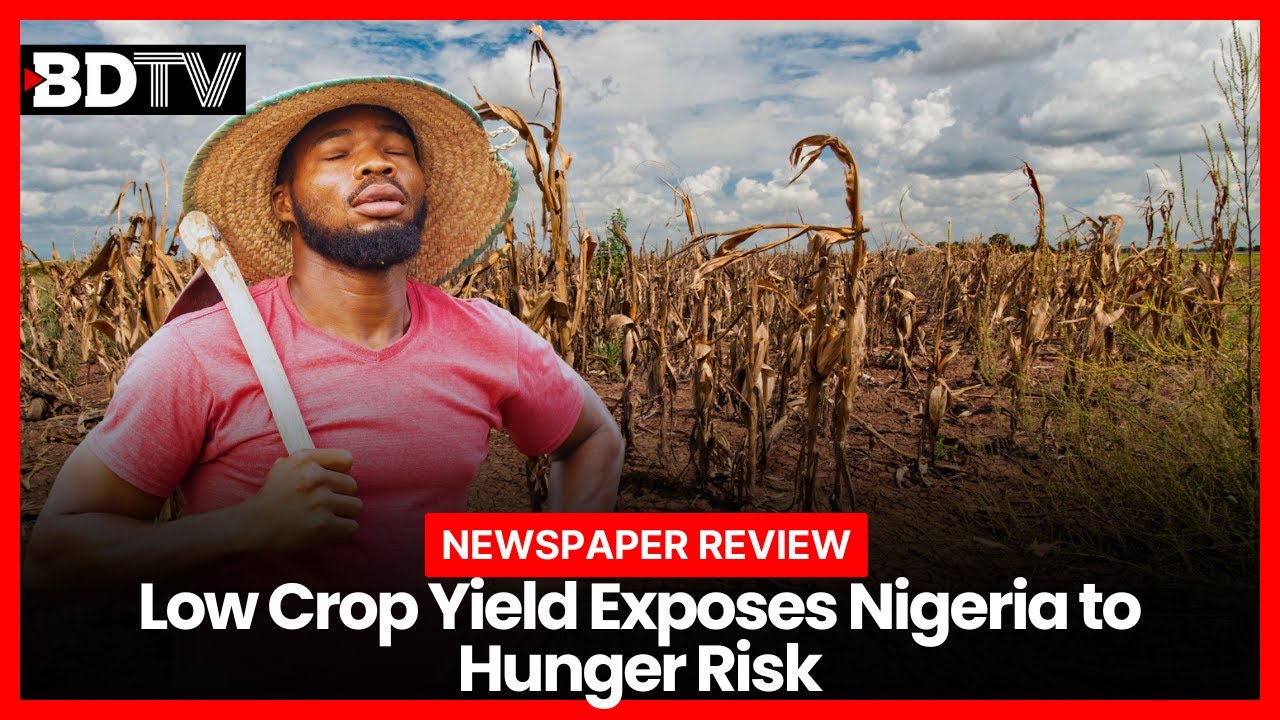
Low Crop Yield Exposes Nigeria to Hunger Risk

Nigeria, Africa's most populous nation, is grappling with a severe food security crisis, driven significantly by persistently low crop yields. We dive deep into the urgent issue, exploring how the ...current state of Nigerian agriculture is exposing millions to hunger risk in 2025 and beyond. With a rapidly growing population, the demand for food is escalating, yet our farmlands are struggling to keep up.

We uncover the critical challenges facing Nigerian farmers, from the devastating impact of climate change – including erratic rainfall, floods, and droughts – to rampant insecurity in farming communities that displaces farmers and disrupts agricultural activities. The video highlights how factors like poor agricultural practices, lack of access to quality inputs (such as high-yielding seeds and genuine fertilizers), and insufficient mechanization are contributing to this alarming productivity gap. Did you know Nigeria's average yield per hectare for staple crops like maize, tomatoes, and potatoes lags far behind regional peers? We break down these shocking statistics and what they mean for the average Nigerian household.

Beyond the farm gate, post-harvest losses remain a massive bottleneck, with a significant percentage of harvested produce rotting due to inadequate storage facilities and poor transportation infrastructure. This wastage further exacerbates the food shortage in Nigeria, driving up food inflation and making essential commodities unaffordable for many.


But it's not all grim. This video also explores tangible solutions to low crop yield in Nigeria and outlines crucial agricultural policies in Nigeria for 2025 aimed at revitalizing the sector. We discuss the importance of sustainable agriculture practices, the potential of precision farming techniques, and the urgent need for improved seed varieties and efficient irrigation systems in Nigeria. Discover how investing in farmer education and knowledge sharing, strengthening agricultural value chains, and attracting private investments in agriculture can transform Nigeria's food landscape.

Learn about the ongoing government initiatives for food security in Nigeria, including efforts to provide support to smallholder farmers and address infrastructural deficits. We emphasize the role of youth in agriculture and the potential for technological adoption to bridge the productivity gap. Understanding the public perception of the Nigeria food crisis is key, and this video aims to provide a comprehensive, data-driven analysis to empower viewers with knowledge and inspire collective action. Join us as we explore the path from scarcity to surplus, aiming to secure a food-stable future for Nigeria.

#nigeria #food #agriculture #foodsecurity #hunger #farming #climatechange #sustainableagriculture #agritech #foodinflation #nigerianfarmers #postharvest
Show More
Low Crop Yield Exposes Nigeria to Hunger Risk
Now Playing
Low Crop Yield Exposes Nigeria to Hunger Risk
Nigeria, Africa's most populous nation, is grappling with a severe ...
Nigeria, Africa's most populous nation, is grappling with a severe food security crisis, driven significantly by persistently low crop yields. We dive deep into the urgent issue, exploring how the ...current state of Nigerian agriculture is exposing millions to hunger risk in 2025 and beyond. With a rapidly growing population, the demand for food is escalating, yet our farmlands are struggling to keep up.

We uncover the critical challenges facing Nigerian farmers, from the devastating impact of climate change – including erratic rainfall, floods, and droughts – to rampant insecurity in farming communities that displaces farmers and disrupts agricultural activities. The video highlights how factors like poor agricultural practices, lack of access to quality inputs (such as high-yielding seeds and genuine fertilizers), and insufficient mechanization are contributing to this alarming productivity gap. Did you know Nigeria's average yield per hectare for staple crops like maize, tomatoes, and potatoes lags far behind regional peers? We break down these shocking statistics and what they mean for the average Nigerian household.

Beyond the farm gate, post-harvest losses remain a massive bottleneck, with a significant percentage of harvested produce rotting due to inadequate storage facilities and poor transportation infrastructure. This wastage further exacerbates the food shortage in Nigeria, driving up food inflation and making essential commodities unaffordable for many.


But it's not all grim. This video also explores tangible solutions to low crop yield in Nigeria and outlines crucial agricultural policies in Nigeria for 2025 aimed at revitalizing the sector. We discuss the importance of sustainable agriculture practices, the potential of precision farming techniques, and the urgent need for improved seed varieties and efficient irrigation systems in Nigeria. Discover how investing in farmer education and knowledge sharing, strengthening agricultural value chains, and attracting private investments in agriculture can transform Nigeria's food landscape.

Learn about the ongoing government initiatives for food security in Nigeria, including efforts to provide support to smallholder farmers and address infrastructural deficits. We emphasize the role of youth in agriculture and the potential for technological adoption to bridge the productivity gap. Understanding the public perception of the Nigeria food crisis is key, and this video aims to provide a comprehensive, data-driven analysis to empower viewers with knowledge and inspire collective action. Join us as we explore the path from scarcity to surplus, aiming to secure a food-stable future for Nigeria.

#nigeria #food #agriculture #foodsecurity #hunger #farming #climatechange #sustainableagriculture #agritech #foodinflation #nigerianfarmers #postharvest
Show More
Dangote Refinery eyes full transition to Nigerian crude by DEC 2025
Now Playing
Dangote Refinery eyes full transition to Nigerian crude by DEC 2025
Dangote Refinery is set to revolutionize Nigeria's energy landscape by ...
Dangote Refinery is set to revolutionize Nigeria's energy landscape by stopping crude imports and relying entirely on made-in-Nigeria oil by year-end. This monumental shift isn't just about energy independence; it's ...a massive step towards saving billions in foreign exchange (FX), stabilizing the Naira, and driving unprecedented economic growth.

We discuss:

Current Progress & Key Milestones: What percentage of crude is already local? How much is being refined daily?

Cracking the Crude Supply Challenge: Understanding the hurdles like long-term export contracts, pipeline security, and the Domestic Crude Supply Obligation (DCSO) – and how Dangote is overcoming them.

The Ripple Effect on Nigeria's Economy: From potential reductions in fuel prices (new cuts already happening!) and inflation to new investment opportunities in the oil and gas sector and beyond.

Forex Savings & Naira Stability: The projected $25-30 billion annual FX savings and how this bolsters Nigeria's financial strength.

Beyond Fuel: Export Powerhouse: How Dangote is also boosting FX earnings through exports of fertilizer, polypropylene, and coal.

Dangote Refinery eyes full transition to Nigerian crude by DEC 2025

Don't miss this crucial update on Nigeria's economic future and how this one facility is poised to reshape the nation!

#dangote #dangoterefinery #NigeriaEconomy #forex #LocalCrude #Naira #EnergyIndependence
Show More
Why Nigeria's Export Still Behind Despite Naira Devaluation?
Now Playing
Why Nigeria's Export Still Behind Despite Naira Devaluation?
Despite decades of naira devaluation, Nigeria has struggled to achieve ...
Despite decades of naira devaluation, Nigeria has struggled to achieve a significant export boom. While a weaker currency is theoretically supposed to make a country's exports cheaper and more competitive ...in international markets, several underlying issues in Nigeria's economy have prevented this from happening effectively.

Here are the key reasons why naira devaluation has failed to spark an export boom in the Nigerian economy:

Reliance on Oil Exports (Monolithic Economy): Nigeria's economy is heavily dependent on crude oil, which accounts for approximately 90% of its export earnings. Oil prices are largely determined by global economy markets in US dollars, so a devalued naira doesn't significantly make Nigerian oil more competitive. The earnings in naira terms may increase, but the actual volume of oil exported isn't directly boosted by the devaluation. This highlights the challenge of a monolithic economy.

Weak Industrial and Manufacturing Base: A country truly benefits from currency devaluation when it has a strong production base capable of exporting value-added goods. Nigeria lacks this foundation. Most Nigerian manufacturers rely heavily on imported raw materials, machinery, and spare parts. When the naira devalues, the cost of these imported raw materials skyrockets, increasing production costs and making local industries less competitive, rather than more. This impacts the potential for export promotion of manufactured goods. The concept of mini importation from China to Nigeria or mini importation business in Nigeria further underscores this import dependence, as local production for export struggles.

Poor Infrastructure: Inadequate infrastructure, particularly in transportation, logistics (roads, ports, railways), and power supply, significantly hinders export activities. Delays at ports (APMT, APMT export verification), inefficient customs processes, and unreliable electricity make it difficult and expensive for Nigerian businesses to produce and transport goods for export, negating any potential price advantage from devaluation. This also impacts the efficiency of the import and export business.

Policy Inconsistencies and Instability: Frequent changes in government policies, coupled with political instability and a lack of long-term strategic planning, create uncertainty for exporters and deter investment in non-oil sectors of the Nigerian economy.

Bureaucratic Inefficiencies and Corruption: Exporters often face excessive bureaucratic red tape and corruption, which inflate costs and prolong processes, making it challenging to compete globally. Export verification can be a cumbersome process.

Limited Access to Finance: Nigerian exporters, especially small and medium-sized enterprises (SMEs), struggle to obtain affordable financing. Stringent loan conditions and high interest rates limit their ability to invest in production and expand their export capacity.

Why is Nigeria's Export Still Behind Despite Naira Devaluation?

Insecurity: Insecurity in certain regions of Nigeria disrupts supply chains, particularly for agricultural products, and deters investment, further hampering export potential. This affects the backbone of the economy in agriculture.

Lack of Market Information: Many Nigerian exporters lack critical information about international market trends, standards, and competition, limiting their ability to identify and penetrate new markets effectively. This is where entities like the Nigeria Export Promotion Council (NEPC) or Nigerian Export Promotion Council are crucial for export promotion.

Import Dependence: Nigeria remains largely an import-dependent nation. While devaluation makes imports more expensive, which could theoretically encourage local production, the lack of sufficient domestic alternatives and the continued reliance on foreign goods mean that the country often imports at exorbitant prices, fuelling inflation rather than boosting local industry. This connects to concepts like import and export meaning and the overall trade balance.

In essence, while naira devaluation aims to make Nigerian goods cheaper abroad, the underlying structural issues, lack of diversification, and challenging business environment prevent the country from effectively capitalizing on this theoretical advantage to boost its non-oil exports. Sustainable export growth requires comprehensive structural reforms that address these fundamental challenges, rather than solely relying on currency adjustments. This broader view considers the health of the world economy and how economics principles apply to the Nigerian economy.
Decades-old naira devaluation fails to spark export boom
Nigeria faces severe hunger as food basket state boil
CBN affirms banking sector strength, issues transitional guidance for select institutions

#nigeria #cbn #devaluation
Show More
Naira Strengthens as Oil Prices Soar: Middle East Tensions Impact on Nigeria's Economy
Now Playing
Naira Strengthens as Oil Prices Soar: Middle East Tensions Impact on Nigeria's Economy
Increased oil prices, largely driven by escalating Middle East ...
Increased oil prices, largely driven by escalating Middle East tensions, are expected to strengthen the Nigerian Naira. This is because Nigeria is a major oil exporter, and higher crude oil ...prices lead to:

Increased Foreign Exchange Earnings: As oil prices rise, Nigeria earns more foreign currency from its oil exports. This boosts the country's foreign exchange reserves.
Improved FX Liquidity: The increased foreign exchange inflows enhance the Central Bank of Nigeria's (CBN) capacity to intervene in the foreign exchange market, providing more liquidity and helping to stabilize and potentially appreciate the Naira.
Support for the Naira: A greater supply of foreign exchange in the market reduces the pressure on the Naira, making it stronger against other currencies.
However, it's also important to note that while higher oil prices bring benefits for the Naira and government revenue, they can also have some downsides:

Naira Strengthens as Oil Prices Soar: Middle East Tensions Impact on Nigeria's Economy

Inflationary Pressures: Increased global oil prices can lead to a rise in the local pump price of petroleum products like petrol, which in turn can drive up domestic costs, transport fares, and generally contribute to inflationary pressures.
Budget Implications: While the 2025 budget is benchmarked at around $75 per barrel, prices significantly above this level can provide a fiscal advantage. However, relying heavily on oil revenue without sufficient diversification can still expose the economy to future oil price volatility.
Overall, the current geopolitical situation in the Middle East, by pushing up oil prices, is generally seen as a positive development for the Nigerian Naira and the country's foreign exchange reserves in the short to medium term.


Newspaper Review 16/06/25 hosted by Elizabeth Musa


#Naira
#OilPrices
#Nigeria
#Economy
#dangote
#dangoterefinery
#NigerianEconomy
#CrudeOil
#ForexNigeria
#MiddleEastCrisis
#GlobalMarkets
#CBN
#NigeriaNews
#CurrencyStrength
Show More
How to manage biggest silent killer disease
Now Playing
How to manage biggest silent killer disease
Did you know hypertension (high blood pressure) is Nigeria's biggest ...
Did you know hypertension (high blood pressure) is Nigeria's biggest "silent killer," affecting millions without symptoms? Recent reports from BusinessDay highlight how many are unaware they have it until it's ...too late. But there's good news! Health experts are sharing powerful, affordable, and local ways to manage and prevent this deadly disease, often without relying solely on medication.

In this video, we break down the crucial insights from BusinessDay's health articles, focusing on:

The Power of Nigerian Foods: Discover which traditional Nigerian meals and ingredients like unripe plantain, beans, garden eggs, Ofada rice, and even Zobo can naturally help lower your blood pressure. Learn about the potassium-rich foods that fight sodium and relax your blood vessels.
Essential Lifestyle Changes: Beyond diet, we cover the vital habits you need to adopt: reducing salt intake, consistent exercise, getting enough sleep, staying hydrated, managing stress, and limiting alcohol.
Why Early Detection Matters: Understand why regular blood pressure checks are non-negotiable, even if you feel perfectly healthy.
Join us to empower yourself with knowledge and take control of your health! Don't let the silent killer win.

Newspaper Review 11/06/25 hosted by Elizabeth Musa

#HypertensionAwareness #SilentKiller #NigerianHealth #HighBloodPressure #HeartHealthy #HealthyLiving #NigerianFood #PublicHealthNigeria #WellnessJourney #BloodPressureControl #PreventativeCare #BusinessDayHealth #EatLocal #HealthIsWealth #NoSaltChallenge #ExerciseForLife #StayHealthyNigeria
Show More
Nigeria Ditches Cash: N72 Million Transferred Per Second! (Digital Payments Surge)
Now Playing
Nigeria Ditches Cash: N72 Million Transferred Per Second! (Digital Payments Surge)
What are your thoughts on Nigeria's move towards a cashless economy? ...
What are your thoughts on Nigeria's move towards a cashless economy? Are you using digital payments more frequently? Let me know in the comments below! Don't forget to like this ...video if you found it informative and subscribe for more expert analysis on the Nigerian economy and fintech developments. Share this video with anyone interested in the future of money in Nigeria!

Host: Elizabeth Musa

National Debt: A potential increase in Nigeria's borrowing by 24 billion naira, which could balloon the national debt to 183 trillion naira, is discussed [00:36], [00:40], [05:09], [05:37].

Historical context of Nigeria's borrowing since the 1950s is also mentioned [01:59], [02:21].

Suspicious Financial Transfers: The Nigerian Financial Intelligence Unit (NFIU) is probing 48 billion naira in suspicious transfers to Dubai and Hong Kong [01:08], [06:33], [06:49].

Political Developments: The People's Democratic Party (PDP) is facing pressure [01:01], [10:14].

Two Years of Leadership: A congratulatory message celebrating two years of President's leadership and progress is featured [11:41], [12:40], [12:55].

Cost of Living: The increasing cost of goods and its impact on the average Nigerian is discussed [17:47], [18:39], [19:14], [20:11].

Power Sector Issues: Nigeria's power paradox is highlighted [23:19], [23:38], [24:12].

Flare Gas Project: Nigeria's launch of its first flare gas digital infrastructure project is mentioned [26:16], [26:22].

Shift to Cashless Transactions: A significant amount of money being transferred digitally every second (N72 million) indicates a move towards a cashless society [26:57], [27:07], [27:14].

Cartoon of the Day: The show concludes with a discussion of the day's cartoon [29:42], [29:57], [30:05].


Nigeria Ditches Cash: N72 Million Transferred Per Second! (Digital Payments Surge)

Newspaper Review 28/05/25

#Nigeria #CashlessNigeria #DigitalPayments #FintechNigeria #NIP #MobilePayments #NigerianEconomy
Show More
Blackout Economy: How Power Cuts Are CRIPPLING Small Businesses in Nigeria
Now Playing
Blackout Economy: How Power Cuts Are CRIPPLING Small Businesses in Nigeria
Imagine running a business where the power goes out 33 times a month. ...
Imagine running a business where the power goes out 33 times a month. In Nigeria, this is the harsh reality for millions of MSMEs, who are spending fortunes on generators ...just to survive. Drawing from BusinessDay's investigative report, we expose the staggering N96 trillion lost over 8 years due to unreliable electricity. This isn't just an inconvenience; it's a Blackout Economy destroying livelihoods.

#nigeriapowercrisis
#msmesnigeria
#powercuts
#nigeriabusiness
#economicimpact
#lagosbusiness
Show More
Trump AMBUSHES South Africa's President Ramaphosa at White House with 'Genocide' Claims!
Now Playing
Trump AMBUSHES South Africa's President Ramaphosa at White House with 'Genocide' Claims!
The recent meeting between President Donald Trump and South African ...
The recent meeting between President Donald Trump and South African President Cyril Ramaphosa at the White House was a highly contentious and widely reported event, primarily dominated by Trump's insistence ...on unsubstantiated claims of "white genocide" in South Africa.

Ramaphosa's Intent: President Ramaphosa came to the White House hoping to strengthen trade relations, discuss economic cooperation, and ensure South Africa's continued participation in the African Growth and Opportunity Act (AGOA). He even brought prominent white South African golfers, Ernie Els and Retief Goosen, and businessman Johann Rupert, seemingly to charm Trump and diffuse potential tensions.

Trump AMBUSHES South Africa's President Ramaphosa at White House with 'Genocide' Claims!

Trump's "Ambush": Despite Ramaphosa's efforts to steer the conversation towards trade and investment, Trump quickly shifted the focus. In what many observers described as an "ambush," he directly confronted Ramaphosa with allegations of widespread violence and persecution against white farmers in South Africa, which he termed "genocide."

Presentation of "Evidence": To support his claims, Trump dramatically had the lights in the Oval Office dimmed and played a video montage. This video included:

Footage of South African opposition figure Julius Malema (leader of the Economic Freedom Fighters, EFF, a party not part of the government) singing the controversial anti-apartheid song "Dubul' ibhunu" (often translated as "K*ll the Boer" or "K*ll the white farmer").

Images of rows of white crosses in a field, which Trump claimed were "burial sites" of murdered white farmers. (Fact-checks later revealed these crosses were from a 2020 protest memorializing a murdered farming couple, not actual graves, and were later removed.)

Trump also presented Ramaphosa with a stack of printed news clippings, which he claimed documented "death, death, horrible death" of white South Africans. (One image from these articles was later fact-checked and found to be from the Democratic Republic of Congo, not South Africa.)

Newspaper review Hosted by Elizabeth Musa

Ramaphosa's Response: President Ramaphosa maintained a remarkably calm and composed demeanor throughout the exchange. He consistently denied the "white genocide" claims, emphasizing that:

The "K*ll the Boer" chants from opposition parties like the EFF do not represent government policy.
While crime is a serious issue in South Africa, the majority of its victims are Black, and killings are due to general criminal activity, not racially motivated genocide.

He pointed to the presence of prominent white members of his delegation (the golfers and Johann Rupert) as evidence that a genocide was not taking place, stating, "If there was a genocide, these three gentlemen would not be here."

He tried to redirect the conversation back to trade, investment, and the potential for cooperation on critical minerals.
Lack of Resolution on Key Issues: While Ramaphosa tried to present frameworks for trade deals and cooperation, the meeting did not result in any concrete agreements or a clear resolution on the "white genocide" claims. Trump publicly stated he had not "made up his mind" on the issue.

Aftermath: The meeting was widely seen as a diplomatic challenge for Ramaphosa, who was praised by many for his composure under pressure. It also highlighted the persistence of misinformation about South Africa's land and racial issues within certain political circles. Ramaphosa later stated that despite the public confrontation, private discussions went well and he believed Trump had some "doubt and disbelief" about his own claims.

#TrumpRamaphosa
#SouthAfrica
#WhiteHouseMeeting
#GenocideClaims
#USAfricaRelations
#DonaldTrump
#CyrilRamaphosa
#Diplomacy
#GlobalPolitics
#BreakingNews
Show More
Landlords, developers to reap big on FG’s tax reform | Rising poverty mutes Tinubu reform gains
Now Playing
Landlords, developers to reap big on FG’s tax reform | Rising poverty mutes Tinubu reform gains
An episode of the BDTV Breakfast Show where hosts Elizabeth Musa and ...
An episode of the BDTV Breakfast Show where hosts Elizabeth Musa and Muhammad Akoji review the front pages of major Nigerian newspapers. The discussion spans current events, including international conflicts, ...entertainment news, economic reforms within Nigeria, and national security concerns.

International Relations & Conflict:

India-Pakistan Tensions: The show opens with the escalating conflict between India and Pakistan, described as reaching a "war level" [00:29]. The core issue is a terrorist attack in the Kashmir region [00:42]. The discussion emphasizes the critical nature of the situation, given both nations are nuclear powers [01:23].

Entertainment, Fashion & Culture:

Nigerian Representation at Met Gala: The hosts celebrate the growing presence and recognition of Nigerians in global entertainment and fashion, specifically mentioning appearances by Nigerian celebrities and designers at the Met Gala [02:14], [03:11].

Sports Commentary:

UEFA Champions League: The UEFA Champions League semi-final is a point of excitement, referred to as a "gold rush" [04:16]. The discussion highlights high-scoring matches and intense competition among European football giants [04:41].

Nigerian Economy - Reforms & Poverty:

Impact of Tinubu's Reforms: A significant portion of the discussion centers on Nigeria's economic situation, referencing a Business Day headline: "Rising poverty mutes Tinubu's reform gains" [06:15]. Despite government reforms like unifying the exchange rate and removing subsidies [11:05], increasing poverty levels are overshadowing positive outcomes [11:20]. The Senate President's acknowledgment of widespread suffering and hunger is noted [10:54].

Nigerian Governance & Taxation:

Tax Reform Bill: The potential passage of a new tax reform bill by the Senate is analyzed [07:07]. This reform is aimed at benefiting landlords and developers by exempting dividends and rentals from real estate investments from taxes [07:40].

National Security in Nigeria:

Rising Insecurity: The Punch newspaper's front page highlights the growing insecurity in Nigeria [16:09]. Retired military generals are calling for the urgent rearmament of the Nigerian Armed Forces [16:17] to combat terrorists who are reportedly using sophisticated weaponry [18:20]. The Senate is also moving to address the killings [17:44].

Financial Crimes & Law Enforcement:

Arrest of VeryDarkMan (VDM): The arrest of the online personality VeryDarkMan (VDM) by the EFCC (Economic and Financial Crimes Commission) is discussed [21:13], with conflicting reports circulating about the reasons for his detention [24:01].

#newspaperreview #economy
Show More
How AGF report, refinery scandal ended kyari's reign
Now Playing
How AGF report, refinery scandal ended kyari's reign
Newspaper Review 050525 - How AGF report, refinery scandal ended ...
Newspaper Review 050525

- How AGF report, refinery scandal ended kyari's reign https://businessday.ng/news/article/how-agf-report-refinery-scandal-ended-kyaris-reign/

- CBN cuts ways & means by 59% in boost for reforms https://businessday.ng/pro/article/cbn-cuts-ways-means-by-59-in-boost-for-reforms/

- Supply shortfall spurs $6.7m opportunity for ...
pepper growers https://businessday.ng/pro/article/supply-shortfall-spurs-6-7m-opportunity-for-pepper-growers/

#news #newpapers
Show More
Aso Rock Solar Push Highlights Grid Woes | IMF Slashes Nigeria’s Growth Forecast
Now Playing
Aso Rock Solar Push Highlights Grid Woes | IMF Slashes Nigeria’s Growth Forecast
IMF cuts Nigeria's growth forecast on lower oil prices ...
IMF cuts Nigeria's growth forecast on lower oil prices https://businessday.ng/breaking-news/article/imf-cuts-nigerias-2025-growth-forecast-to-3-0-on-weakening-oil-supply/#:~:text=The%20International%20Monetary%20Fund%20(IMF,and%20escalating%20global%20trade%20tensions.

Aso Rock solar plans amplifies national grid failure https://businessday.ng/pro/article/aso-rock-solar-plan-amplifies-national-grid-failure/

Tax bill target priority sectors to overhaul economy https://businessday.ng/news/article/tax-bills-target-priority-sectors-to-overhaul-economy/#:~:text=The%20priority%20sector%20incentive%20outlined,priority%20sector%20incentive%20is%20manufacturing.

#news #newspaperreview #oil
Healthcare lapses leave even the insured paying out of pocket
Now Playing
Healthcare lapses leave even the insured paying out of pocket
Newspaper Review 24-04-25 Healthcare lapses leave even the insured ...
Newspaper Review 24-04-25

Healthcare lapses leave even the insured paying out of pocket https://businessday.ng/pro/article/healthcare-lapses-leave-even-the-insured-paying-out-of-pocket/#google_vignette

IMF to FG: Broaden subsidy reforms with fiscal discipline https://businessday.ng/business-economy/article/imf-to-fg-broaden-subsidy-reforms-with-fiscal-discipline/#:~:text=The%20International%20Monetary%20Fund%20(IMF,a%20difficult%20but%20necessary%20step.

#newspaperreview #imf #solar
Parents spend ₦33.6m per child as education turns luxury
Now Playing
Parents spend ₦33.6m per child as education turns luxury
Newspaper Review 170425 Resilient insurers tap innovation to drive ...
Newspaper Review 170425

Resilient insurers tap innovation to drive growth https://businessday.ng/news/article/resilient-insurers-tap-innovation-to-drive-growth/

Parents spend ₦33.6m per child as education turns luxury

Cartoon of the Day: Insecurity

#petrol #nigeria #insecurity #newspaper
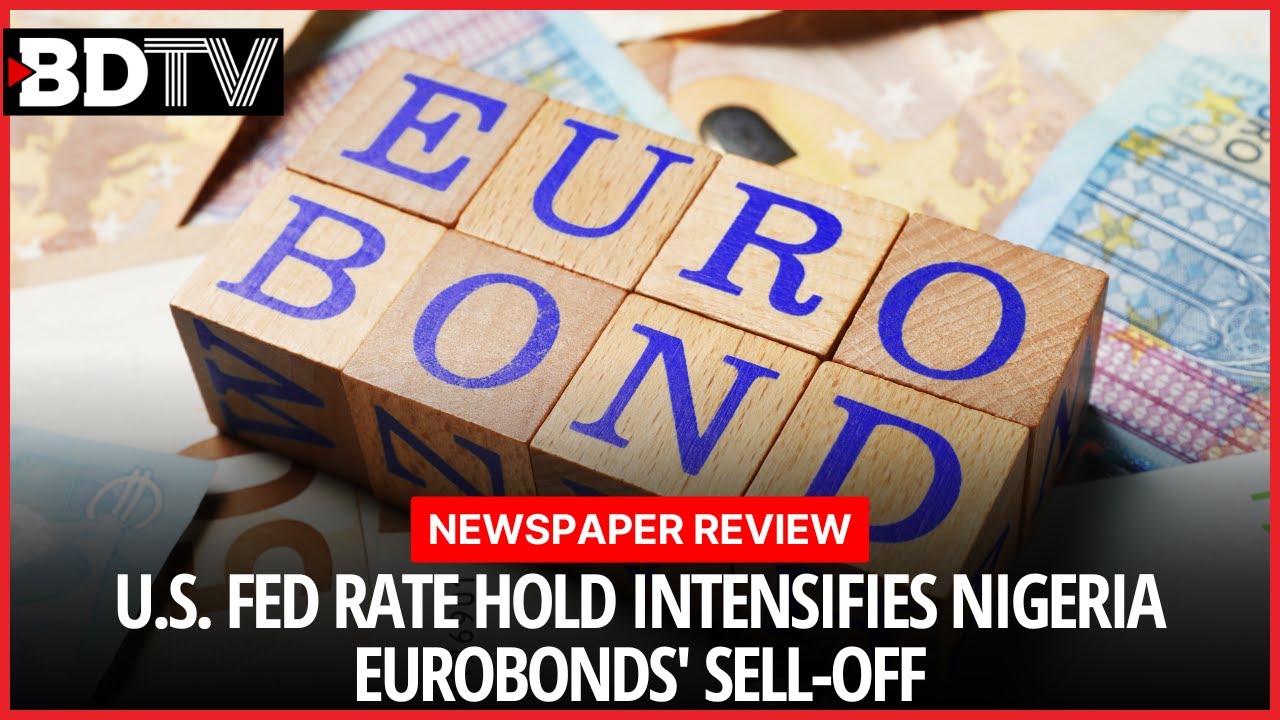
U.S. Fed rate hold intensifies Nigeria Eurobonds' sell-off
Now Playing
U.S. Fed rate hold intensifies Nigeria Eurobonds' sell-off
U.S. Fed rate hold intensifies Nigeria Eurobonds' sell-off ...
U.S. Fed rate hold intensifies Nigeria Eurobonds' sell-off https://businessday.ng/news/article/u-s-fed-rate-hold-intensifies-nigeria-eurobonds-sell-off/#:~:text=The%20yields%20on%20Nigerian%20Eurobonds,move%20away%20from%20riskier%20assets.

Dangote refinery's jet fuel adds Saudi to new market https://businessday.ng/news/article/dangote-refinerys-jet-fuel-adds-saudi-to-new-market/

#news #nigeria
FOREIGN RICE FLOODS MARKETS AS COSTS SQUEEZE LOCAL MILLS
Now Playing
FOREIGN RICE FLOODS MARKETS AS COSTS SQUEEZE LOCAL MILLS
Foreign rice floods markets as costs squeeze local mills ...
Foreign rice floods markets as costs squeeze local mills https://businessday.ng/agriculture/article/foreign-rice-floods-markets-as-costs-squeeze-local-mills/

Nigerian Eurobonds feel heat of global trade tensions https://businessday.ng/pro/article/nigerian-eurobonds-feel-heat-of-global-trade-tensions/

#rice #news
1 of 3

Lorem ipsum dolor sit amet, consectetur adipiscing elit. Ut elit tellus, luctus nec ullamcorper mattis, pulvinar dapibus leo.

Facebook Twitter Youtube